It’s a coincidence that winter often reveals the true resilience of LiFePO4 batteries, as cold temperatures can ensure their performance is greatly compromised. To ensure they operate reliably, we must understand proper thermal management and storage techniques. Effective measures can prevent capacity loss and internal resistance increases, but the question remains: what specific strategies are most effective for maintaining battery health during harsh winter conditions?
Key Takeaways
- Insulate batteries and use active resistive heating to maintain optimal temperature during cold weather.
- Store batteries in a climate-controlled environment, avoiding deep discharges and regularly checking voltage.
- Pre-warm batteries before charging and avoid charging below 0°C to prevent capacity loss.
- Monitor battery temperature with sensors and adjust thermal management strategies accordingly.
- Perform regular professional check-ups to detect electrolyte irregularities and prevent long-term damage.
How Cold Temperatures Affect LiFePO4 Battery Performance
Cold temperatures considerably impact the performance of LiFePO4 batteries by reducing their capacity and increasing internal resistance. When exposed to low temperatures, the chemical reactions within the battery slow down, impairing overall efficiency. Effective thermal management becomes essential to mitigate these effects, maintaining ideal operating conditions. Implementing proper battery insulation helps retain internal heat, preventing rapid cooling that diminishes performance. Without adequate insulation, internal resistance rises, leading to reduced power output and faster capacity loss. To guarantee reliable operation during winter, we must focus on both insulation and active thermal management strategies, such as heating elements or controlled environments. These measures help preserve battery health, sustain capacity, and maximize performance in cold conditions.
How to Properly Store Your Batteries During Winter
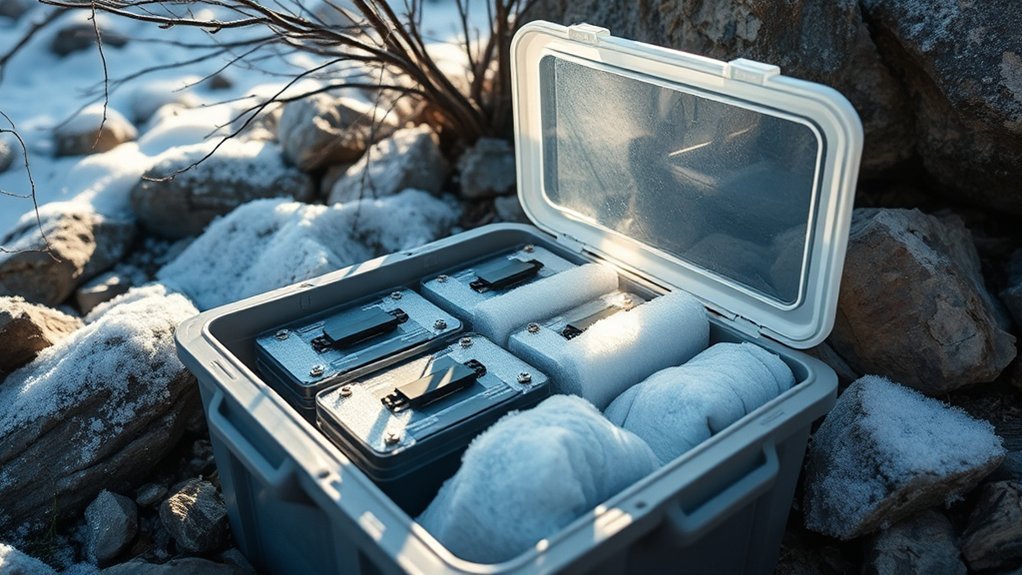
Proper storage of LiFePO4 batteries during winter is essential to maintaining their longevity and performance. Effective winter storage methods include ensuring battery insulation to prevent temperature fluctuations that can damage internal components. Insulating materials, such as foam or specialized battery wraps, help maintain stable temperatures and reduce exposure to extreme cold. It’s important to store batteries in a dry, climate-controlled environment, ideally at room temperature or slightly above, avoiding direct contact with freezing surfaces. Additionally, storing batteries with a partial state of charge (around 40-60%) minimizes capacity loss during extended periods of inactivity. Regularly checking voltage levels and inspecting insulation integrity are integral parts of proper winter storage. These methods collectively safeguard the battery’s chemistry and extend its service life throughout the colder months.
Best Practices for Charging LiFePO4 Batteries in Cold Weather
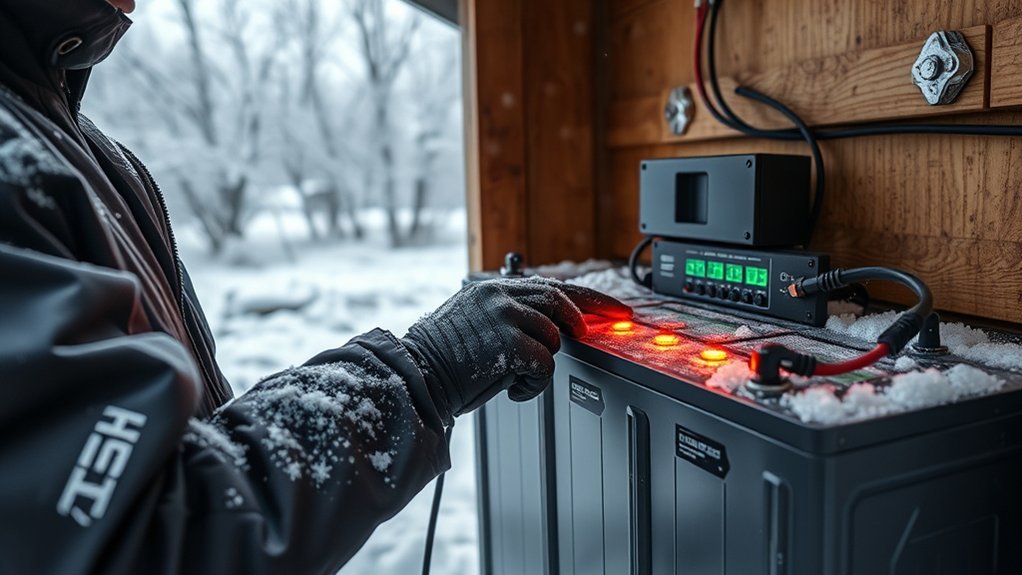
Ever wonder how to optimize the charging process for LiFePO4 batteries in low temperatures? The key is minimizing thermal loss through effective battery insulation and using appropriate cold weather adapters. Insulating the battery helps retain internal heat, which is vital for safe, efficient charging. Cold weather adapters ensure proper voltage regulation and prevent overcharging or undercharging caused by temperature fluctuations. It’s important to avoid charging batteries at ambient temperatures below 0°C, as reduced chemical activity can lead to incomplete charging or damage. Always monitor voltage levels carefully and consider pre-warming the battery if possible. Proper insulation combined with the right adapters maintains ideal charge acceptance, ensuring safety and prolonging battery life in winter conditions.
Maintaining Optimal Battery Temperature in Winter Conditions
How can we maintain LiFePO4 batteries within their ideal temperature range during winter? Effective thermal management is essential for preserving battery performance and longevity. We implement strategies such as applying battery insulation to reduce heat loss and maintaining consistent operating temperatures. Active heating systems, like resistive heaters, can be integrated to prevent temperatures from dropping below the recommended range. Monitoring temperature sensors ensures precise control, enabling real-time adjustments. Proper insulation minimizes thermal gradients and conserves energy, while insulation materials must be chosen based on thermal conductivity. By combining insulation, active heating, and vigilant temperature monitoring, we can sustain the best battery temperature, ensuring reliable performance and extended lifespan during winter conditions.
- Use high-quality battery insulation materials
- Incorporate active resistive heating elements
- Install temperature sensors for real-time monitoring
- Maintain consistent thermal management protocols
Troubleshooting Common Winter Battery Issues
Cold temperatures considerably reduce Lifepo4 battery performance by increasing internal resistance and decreasing capacity. Charging difficulties arise when low temperatures hinder electrolyte movement, leading to incomplete or slow charging cycles. Addressing these issues requires precise temperature management and appropriate charging protocols.
Cold Temperature Effects
During winter, low temperatures markedly impact LiFePO4 battery performance by reducing chemical reaction rates within the cells. This decline leads to decreased capacity, increased internal resistance, and potential voltage drops under load. To mitigate these effects, effective thermal management is essential. Proper battery insulation helps retain heat and maintain a stable operating temperature, preventing rapid cooling. Additionally, active heating solutions or warm environments can sustain ideal performance. Key considerations include:
- Implementing high-quality insulation materials around the battery
- Using external heaters or heat pads for supplemental warmth
- Avoiding exposure to extreme cold environments
- Monitoring temperature to prevent overheating during thermal management processes
Addressing cold temperature effects through these measures ensures consistent performance and longevity of LiFePO4 batteries in winter conditions.
Charging Difficulties
Charging LiFePO4 batteries in winter can present significant challenges, as low temperatures increase internal resistance and hinder chemical reactions essential for efficient charging. To mitigate these issues, proper battery insulation is critical, as it helps maintain a stable temperature and reduces charge variability. Cold weather strategies include using external heating sources or chargers with temperature compensation features, guaranteeing the battery reaches ideal operating conditions before charging. Insufficient insulation can lead to voltage drops and incomplete charging cycles, risking capacity loss over time. We recommend monitoring battery temperature closely and adjusting charging parameters accordingly. Implementing these cold weather strategies ensures safer, more reliable charging performance and extends the lifespan of your LiFePO4 batteries during harsh winter conditions.
Tips for Extending Your Battery’s Lifespan Throughout the Cold Season
To maximize your Lifepo4 battery’s lifespan throughout the winter, it’s essential to implement specific maintenance practices that mitigate the effects of low temperatures. Proper management prevents capacity loss and extends usability. Keep batteries within an ideal temperature range by insulating or storing them indoors when possible. Regularly monitor voltage and state of charge to avoid over-discharge in cold conditions. Practice eco-friendly disposal and battery recycling at the end of their lifecycle to reduce environmental impact. Additionally, avoid deep discharges in freezing temperatures, as this accelerates degradation. These steps help maintain performance and prolong lifespan during winter months.
Proper winter care—insulate, monitor voltage, avoid deep discharges, and recycle responsibly to extend Lifepo4 battery lifespan.
- Insulate batteries against cold exposure
- Store in a controlled environment
- Regularly check voltage and capacity
- Properly recycle or dispose of batteries
When to Seek Professional Help for Battery Maintenance
While routine maintenance can address many winter battery concerns, there are specific signs that indicate professional intervention is necessary. If you notice persistent voltage drops despite proper charging, it may signal internal degradation requiring expert assessment. Unusual swelling or physical damage warrants immediate evaluation to prevent safety hazards. When battery performance declines markedly, a thorough diagnostic can determine if battery recycling is appropriate or if battery replacement is necessary. Additionally, if electrolyte levels are irregular or if corrosion is extensive, professional servicing ensures correct handling and disposal. Regularly scheduled professional check-ups optimize lifespan and safety, especially in cold conditions that accelerate wear. Recognizing these indicators helps prevent unexpected failures and promotes responsible disposal through proper battery recycling processes.
Frequently Asked Questions
How Can I Prevent My Lifepo4 Batteries From Freezing?
To prevent our Lifepo4 batteries from freezing, we implement battery insulation and heating solutions, ensuring consistent temperature regulation. These methods maintain ideal performance and safety, especially during cold winter conditions, by actively managing battery temperature effectively.
Are There Specific Winter Accessories to Protect Batteries?
Could your batteries survive winter’s chill? We recommend using thermal insulation and battery warmers as essential accessories, ensuring ideal performance and longevity by maintaining a consistent temperature and preventing freezing during cold months.
Can Cold Weather Cause Permanent Damage to Lifepo4 Batteries?
Cold weather can cause permanent damage to Lifepo4 batteries due to extreme thermal regulation challenges affecting their battery chemistry. Proper thermal management, including insulation and controlled heating, prevents damage, ensuring longevity and peak performance in winter conditions.
How Often Should I Check Battery Health in Winter?
We recommend checking battery health weekly during winter, focusing on battery storage conditions and temperature monitoring. This guarantees peak performance, prevents damage, and maintains longevity, especially when cold temperatures can impact Lifepo4 battery efficiency.
What Are Signs of Battery Failure in Cold Conditions?
We observe signs like reduced battery capacity and increased internal resistance, indicating failure. Cold conditions exacerbate these issues, so we recommend monitoring voltage drops and performance declines closely to prevent unexpected battery failure.
Conclusion
By following these winter maintenance practices, we can guarantee our LiFePO4 batteries stay reliable and efficient despite the cold. Proper insulation, temperature monitoring, and careful charging prevent capacity loss and damage. While it may seem demanding, imagine your batteries operating smoothly like a well-tuned engine, even in freezing conditions. With proactive care, we protect our investment, ensuring longevity and performance throughout the winter months. Trust these procedures to keep your power source resilient when it’s needed most.