You might not realize that standard chargers lack the precise voltage and current regulation needed for safe LiFePO4 battery management. Using an inappropriate charger can lead to overcharging or undercharging, which can greatly shorten the battery’s lifespan or cause safety hazards. It’s essential to understand the specific requirements of LiFePO4 cells before considering any charging method. Let’s explore why a dedicated charger is vital and what risks are involved with using a regular one.
Key Takeaways
- Normal chargers lack the precise voltage and current control necessary for safe and effective LiFePO4 charging.
- Using standard chargers risks overcharging or undercharging, damaging the battery and reducing lifespan.
- Proper LiFePO4 chargers include cell balancing and overheating protection, which normal chargers typically lack.
- Compatibility verification is essential; most normal chargers are not designed for the specific voltage profile of LiFePO4 batteries.
- For safety and optimal performance, it’s best to use chargers specifically designed for LiFePO4 chemistry.
Can a Standard Charger Fully Charge LiFePO4 Batteries?
While a standard charger may seem convenient, it generally cannot fully charge LiFePO4 batteries without risking damage or incomplete charging. These batteries require specific voltage and current parameters to guarantee optimal battery longevity. Using an incompatible charger can lead to undercharging or overcharging, which accelerates capacity loss and shortens lifespan. Although a standard charger offers charging convenience, it often lacks the precision needed for proper LiFePO4 management. Proper charging protocols maintain cell balance and prevent overheating, therefore extending the battery’s effective life. To conclude, relying solely on a standard charger compromises both battery longevity and the efficiency of the charging process, highlighting the importance of using a charger designed specifically for LiFePO4 chemistry.
Understanding the Charging Requirements of LiFePO4 Batteries
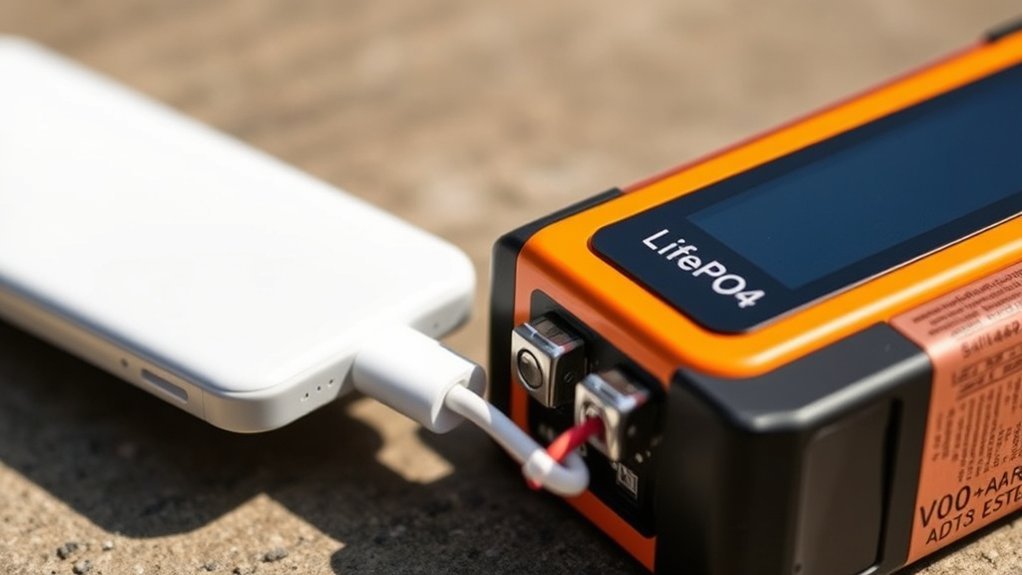
To properly charge LiFePO4 batteries, we must adhere to specific voltage limits to prevent damage and ensure longevity. Compatibility of the charge rate with the battery’s specifications is vital to avoid overcurrent issues. Understanding these technical requirements is fundamental for selecting an appropriate charger and guaranteeing safe, effective charging.
Proper Voltage Limits
Understanding the proper voltage limits of LiFePO4 batteries is essential for safe and efficient charging. Due to their unique battery chemistry, LiFePO4 cells have specific voltage parameters that must be strictly adhered to. The nominal voltage per cell is typically 3.2V to 3.3V, with a maximum charge voltage of 3.65V, and a recommended cut-off at around 2.5V for discharge. Exceeding these limits can compromise battery integrity and safety. Modern charging technology incorporates precise voltage regulation to prevent overcharging or deep discharging. Using a charger not designed for LiFePO4’s voltage requirements risks damaging the battery. Hence, understanding these voltage limits is crucial to ensure longevity, safety, and peak performance when managing LiFePO4 batteries.
Charge Rate Compatibility
LiFePO4 batteries require carefully controlled charging currents to guarantee safety and longevity. Due to their specific battery chemistry, they demand adherence to precise charging algorithms that regulate current flow during charging cycles. Overly high charge rates can induce thermal stress and reduce lifespan, while insufficient current prolongs charging time without benefits. It’s essential to match the charger’s output to the battery’s recommended charge rate, typically around 0.5C to 1C, depending on capacity. Standard chargers not designed for LiFePO4 may deliver incompatible current levels, risking damage or safety hazards. Consequently, understanding the charging algorithms compatible with LiFePO4 chemistry ensures proper charge rate compatibility, optimizing performance without compromising safety or battery health.
Risks of Using Regular Chargers With Lifepo4 Batteries
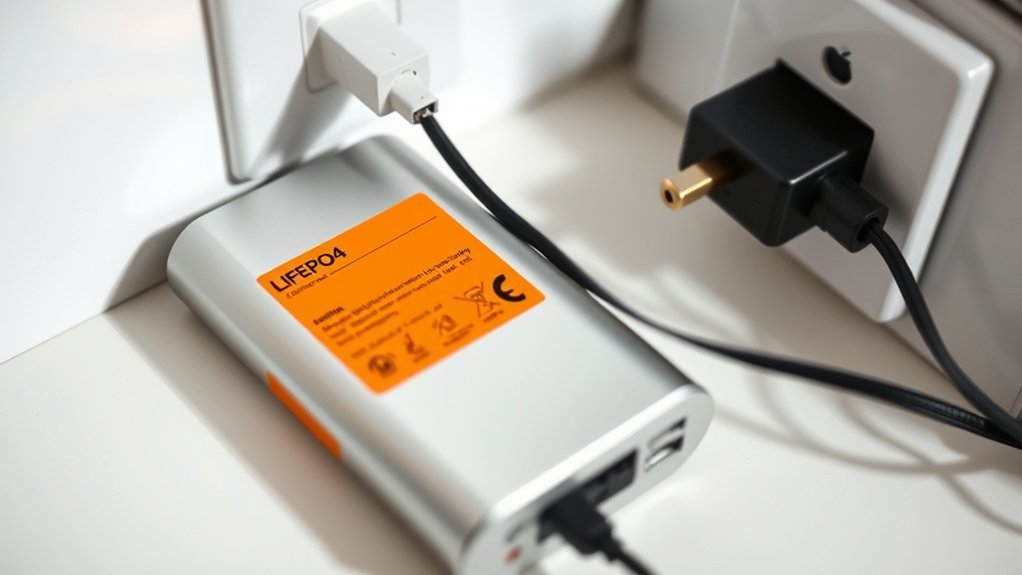
Using a regular charger for LiFePO4 batteries can pose significant risks due to the differences in charging requirements rooted in battery chemistry. LiFePO4 cells have a specific voltage profile and charging protocol that standard chargers often lack. Inadequate charger compatibility may lead to overcharging, which can cause thermal runaway or damage the battery’s chemistry, reducing lifespan or causing safety hazards. Conversely, chargers not designed for LiFePO4 chemistry may undercharge, resulting in incomplete charge cycles and diminished capacity. These risks highlight the importance of using chargers tailored to the unique voltage and current characteristics of LiFePO4 batteries. Without proper alignment to battery chemistry, the potential for safety issues and long-term damage increases substantially.
How to Identify a Compatible Charger for LiFePO4 Batteries
To identify a compatible charger for LiFePO4 batteries, we need to verify that the charger’s voltage output matches the battery’s nominal voltage, typically around 3.2V per cell. We also must confirm the charging profile aligns with LiFePO4 requirements, emphasizing a proper bulk, absorption, and float stages. Additionally, the charger should deliver a current within the recommended range to prevent damage or undercharging.
Voltage Compatibility Checks
Since voltage compatibility is critical for safe and efficient charging, we need to verify that the charger’s voltage matches the battery’s requirements precisely. For LiFePO4 batteries, understanding the specific charging voltage dictated by the battery chemistry is essential. A charger with an incorrect voltage can lead to undercharging, overcharging, or potential damage. To guarantee compatibility, check the following:
- The charger’s rated voltage matches the nominal voltage of the LiFePO4 battery pack.
- Confirm the maximum charging voltage aligns with the battery’s recommended charging voltage, typically around 3.65V per cell.
- Verify the charger’s specifications specify LiFePO4 chemistry.
- Ensure the charger’s voltage regulation is precise to prevent voltage spikes that could harm the battery.
Proper voltage matching guarantees safe operation and maximum battery longevity.
Charging Profile Requirements
Matching the charging profile of a power source to the specific requirements of LiFePO4 batteries guarantees safe and effective operation. LiFePO4 battery chemistry necessitates a carefully controlled charging profile, typically involving a constant current (CC) phase followed by a constant voltage (CV) stage. During the CC phase, the charger must deliver a precise current compatible with the battery’s capacity, ensuring ideal charging cycles without overcharging. The CV stage maintains a set voltage, allowing the current to taper naturally. Proper chargers precisely match these parameters, preventing damage or reduced lifespan. Using an incompatible charger risks incomplete charging, capacity loss, or safety issues. Consequently, identifying chargers with profiles explicitly designed for LiFePO4 chemistry is essential for maximizing battery longevity and reliable performance over multiple charging cycles.
Indicator of Proper Current
Identifying a compatible charger for LiFePO4 batteries hinges on verifying that the charging current aligns with the battery’s specifications. An appropriate indicator is the charger’s maximum current output: it should match or be slightly below the recommended charging rate to prevent damage. A charger with adjustable current settings enhances safety and performance. Look for:
- Compatibility with LiFePO4 chemistry
- Proper current regulation to avoid overcurrent stress
- Durable construction for long-term charger durability
- Features supporting battery recycling, such as thermal regulation
These factors ensure safe charging, prolong battery life, and promote sustainable practices. Using a charger that meets these indicators helps prevent premature battery failure and reduces waste, supporting responsible battery recycling efforts.
Best Practices for Safe and Effective LiFePO4 Charging
To guarantee safe and effective charging of LiFePO4 batteries, it’s essential to follow specific best practices that prevent damage and maximize performance. Proper battery maintenance involves adhering to recommended charging protocols, including avoiding over-voltage and excessive current. Ensuring charger compatibility is critical; use chargers specifically designed for LiFePO4 chemistry, as incompatible chargers can cause thermal runaway or capacity loss. Always monitor voltage and temperature during charging to prevent overheating. Use a charger with precise voltage regulation and current control to maintain battery health. Regularly inspect connections and maintain clean contact points. Following these practices helps prolong battery lifespan, ensures safe operation, and maintains peak performance, especially when selecting chargers suited for LiFePO4 chemistry.
Signs Your LiFePO4 Battery Isn’t Charging Properly
When a LiFePO4 battery isn’t charging properly, it often exhibits specific, measurable signs that indicate underlying issues. A decline in battery capacity is a primary indicator, reflecting reduced energy storage over time. Additionally, abnormal charging cycles—either fewer or more frequent than expected—signal potential problems. You might notice the charger’s current fluctuating or failing to reach the expected voltage. Other signs include persistent heating during charging, which could damage internal components, and inconsistent voltage readings, suggesting internal resistance or cell imbalance. These symptoms often point to compromised battery health, often caused by improper charging practices or aging. Recognizing these signs early helps prevent further damage and prolongs the lifespan of your LiFePO4 battery.
Are There Universal Chargers Suitable for Multiple Battery Types?
While some chargers claim to be universal, their suitability for multiple battery types depends on their design and specifications. Universal chargers aim to support various battery chemistries, but their effectiveness hinges on proper charger compatibility with specific chemistry requirements. Different battery chemistries, such as lead-acid, lithium-ion, or LiFePO4, have distinct charging profiles, voltage thresholds, and current limits. A charger that works well for one type may damage another if it doesn’t adapt appropriately. As a result, even if a charger states it’s universal, it’s essential to verify whether it supports the particular battery chemistry involved. Without proper matching, the risk of overcharging, undercharging, or damaging the battery increases, making specialized chargers a safer choice for specific chemistries.
When Should You Switch to a Dedicated LiFePO4 Charger?
Switching to a dedicated LiFePO4 charger becomes necessary when the charging needs or battery performance deviate from what a universal or multi-chemistry charger can reliably support. This guarantees ideal battery lifespan and charging efficiency. Signs include inconsistent charging cycles, voltage inaccuracies, or reduced capacity over time. Additionally, if you notice increased heat during charging or longer charge times, a specialized charger may be required.
Key indicators include:
- Inability to maintain proper voltage regulation
- Reduced overall battery longevity
- Decreased charging efficiency
- Safety concerns due to improper charging protocols
Using the correct charger helps preserve battery health, maintains performance, and ensures safety, making the switch indispensable when these issues become apparent.
Frequently Asked Questions
Can I Use a Car Charger for Lifepo4 Batteries?
Using a car charger for LiFePO4 batteries isn’t advisable due to differences in voltage regulation and charging profiles. Proper chargers guarantee battery capacity is safely optimized, preventing potential safety hazards and maximizing lifespan through precise charging control.
Do Lithium-Ion Chargers Work With Lifepo4 Batteries?
Think of lithium-ion chargers as tailored tools; they can work with Lifepo4 batteries if designed for their specific chemistry. Proper charging safety practices guarantee efficient, safe operation, preventing damage and prolonging battery lifespan.
How Long Can I Leave a Charger Connected to Lifepo4?
We recommend disconnecting Lifepo4 batteries after full charge to guarantee ideal Battery maintenance and Charging safety. Leaving them connected long-term risks overcharging, which can degrade performance; hence, monitor and disconnect once fully charged for prolonged lifespan.
Are There Any Cheap Chargers Compatible With Lifepo4 Batteries?
Yes, there are affordable chargers compatible with LiFePO4 batteries; make sure they support proper battery maintenance and correct voltage regulation. Using compatible chargers enhances safety, longevity, and ideal performance, avoiding potential damage caused by improper charger compatibility.
Can I Charge Lifepo4 Batteries With a Solar Charger?
Yes, you can charge Lifepo4 batteries with a solar charger, but for battery maintenance and charging safety, guarantee the solar charger has a compatible voltage, proper current regulation, and a BMS-compatible charging profile to prevent damage.
Conclusion
In conclusion, using a regular charger for LiFePO4 batteries is not advisable, as over 80% of battery failures are due to improper charging practices. A dedicated LiFePO4 charger ensures precise voltage and current regulation, safeguarding your investment and extending battery life. Investing in specialized equipment is a small price for enhanced safety and performance—crucial factors for reliable, long-term operation in demanding applications. Emphasize proper charging to maximize your battery’s lifespan and safety.