Maintaining LiFePO4 batteries in solar systems requires a precise approach, combining regular monitoring and adherence to recommended practices to prevent damage and extend lifespan. As professionals, we recognize that proper management involves more than just routine checks; it’s about optimizing performance and safety. This process involves nuanced procedures and critical decision points that can profoundly impact system reliability. To guarantee you’re fully equipped, understanding these key aspects is essential before considering advanced maintenance strategies.
Key Takeaways
- Regularly monitor voltage and temperature to prevent overcharging, deep discharge, and thermal instability.
- Conduct monthly inspections and clean terminals to maintain optimal energy transfer and prevent corrosion.
- Use a proper charger with BMS and maintain charge levels between 20% and 80% for longevity.
- Store batteries in cool, dry environments at around 50% state-of-charge and avoid deep discharges during storage.
- Follow safety protocols during handling, troubleshooting, and recycling to ensure personnel safety and environmental sustainability.
Understanding the Basics of LiFePO4 Batteries for Solar Systems
Understanding the basics of LiFePO4 batteries is vital for enhancing their performance in solar systems. These lithium iron phosphate batteries offer advantages such as thermal stability, longer cycle life, and improved safety. Their environmental impact is notably lower compared to other lithium-ion chemistries, but responsible battery recycling remains paramount to minimize ecological harm. Proper disposal and recycling prevent hazardous materials from contaminating ecosystems and allow valuable materials to be reclaimed. This not only supports sustainability but also reduces the demand for raw material extraction, further lessening environmental degradation. Recognizing these factors helps us maximize battery efficiency while actively contributing to environmentally conscious practices. By understanding both technical performance and environmental considerations, we can guarantee optimal operation and responsible stewardship of LiFePO4 batteries in solar applications.
How to Properly Charge and Discharge Your LiFePO4 Battery?
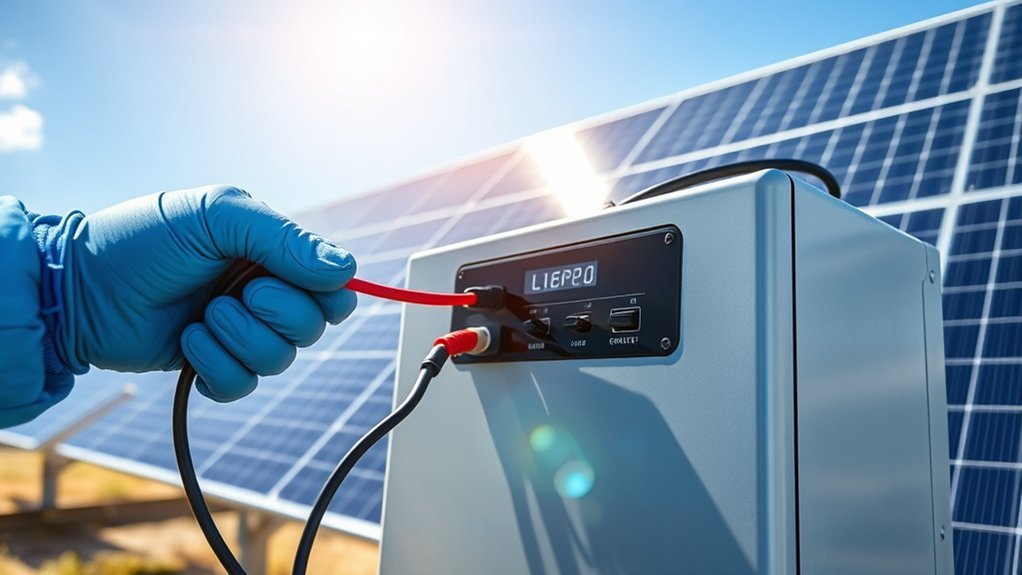
Properly charging and discharging your LiFePO4 battery is fundamental to maintaining its performance and longevity. We recommend using a charger with a dedicated Battery Management System (BMS) to prevent overcharging or deep discharging, which can compromise cell integrity. Maintaining a charge level between 20% and 80% optimizes cycle life and minimizes degradation. Controlled discharging ensures consistent energy delivery while avoiding stress on battery components. Proper disposal and recycling practices are vital for reducing environmental impact; recycling LiFePO4 batteries prevents harmful material release and supports sustainable battery lifecycle management. Adhering to these protocols not only prolongs battery lifespan but also promotes responsible environmental stewardship through effective battery recycling, aligning performance with ecological considerations.
Regular Inspection and Cleaning for Optimal Battery Performance

How often should we inspect and clean our LiFePO4 batteries to guarantee peak performance? Regular inspections are essential, ideally monthly, to detect corrosion, dirt, or electrolyte leakage that could impair efficiency. Cleaning involves removing dust and residue from terminals with a non-abrasive cloth and ensuring terminal connections are secure. This maintenance supports ideal energy transfer and prolongs battery lifespan. Proper handling also influences environmental impact; efficient batteries reduce waste and facilitate effective battery recycling at end-of-life, minimizing ecological harm. Consistent inspection prevents performance degradation that could lead to premature disposal, thereby reducing environmental burdens. By maintaining clean, well-connected batteries, we maximize performance and uphold responsible recycling practices, ultimately contributing to more sustainable solar energy systems.
Monitoring Battery Voltage and Temperature to Prevent Damage
Monitoring battery voltage through regular checks helps us identify potential overcharge or discharge conditions before they cause damage. Simultaneously, tracking temperature thresholds guarantees the battery operates within safe limits, preventing thermal stress. Together, these measures enable us to maintain peak performance and extend the lifespan of our Lifepo4 batteries.
Regular Voltage Checks
Have you ever considered how critical regular voltage checks are to maintaining the health of your Lifepo4 battery? Consistent monitoring guarantees voltage stability, preventing overcharging or deep discharges that can damage cells. Regular voltage assessments aid in proper battery calibration, maintaining accurate state-of-charge readings. By tracking voltage trends, you can identify early signs of imbalance or degradation.
- Establish a consistent measurement schedule for reliable data
- Use calibrated meters to guarantee measurement accuracy
- Watch for voltage fluctuations indicating potential issues
- Correlate voltage data with capacity and cycle life
- Maintain documentation to analyze long-term performance trends
These practices help optimize lifespan, ensuring your battery operates within safe voltage ranges and preserves overall system integrity. Proper voltage checks are essential for proactive maintenance and longevity.
Temperature Thresholds Monitoring
Maintaining ideal temperature thresholds is essential for preventing damage to Lifepo4 batteries, as temperature fluctuations directly impact their performance and longevity. Thermal stability is vital, requiring continuous monitoring of both battery voltage and temperature to detect deviations that could compromise cell integrity. Effective temperature regulation guarantees batteries operate within optimal thermal limits, minimizing risks of overheating or freezing. By implementing sensor-based monitoring systems, we can identify early signs of thermal instability, enabling timely interventions. This proactive approach preserves battery health, enhances cycle life, and prevents thermal runaway conditions. Consistent oversight of temperature thresholds allows for precise control of operating environments, ensuring Lifepo4 batteries remain within safe thermal margins and sustain their designed performance over the long term.
Best Practices for Storage and Long-Term Maintenance
Effective storage and long-term maintenance of LiFePO4 batteries require controlling environmental conditions, including temperature and humidity, to prevent capacity loss. We recommend conducting regular state-of-charge assessments and ensuring proper charging routines to maintain peak performance. Adhering to these practices minimizes degradation and extends the battery’s service life.
Optimal Storage Conditions
Proper storage conditions are essential to preserving the longevity and performance of LiFePO4 batteries. Maintaining an ideal environment minimizes capacity loss and degradation, ultimately reducing the need for premature battery recycling and its associated environmental impact. Suitable storage involves a cool, dry, and well-ventilated space, with temperatures between 0°C and 25°C. Consistent state-of-charge (around 50%) prevents capacity fade and ensures readiness for use. Regularly monitoring voltage levels helps detect potential issues early, reducing waste. Additionally, proper packaging prevents physical damage and contamination. These practices support sustainable lifecycle management by extending battery lifespan, decreasing environmental impact, and promoting responsible disposal or recycling when the end of life is reached. Effective storage therefore balances technical performance with environmental responsibility.
Regular State Checks
Regularly checking the voltage and overall health of LiFePO4 batteries during storage is critical to early detection of potential issues. Consistent monitoring allows us to identify capacity fade, internal resistance increases, or signs of degradation that could compromise performance. These checks help prevent deep discharges or overcharges, which accelerate aging and negatively impact the environment through increased battery recycling needs. Maintaining best state-of-health extends the battery’s lifespan, reducing the frequency of recycling, and minimizes environmental impact. Precise voltage measurements and health assessments enable us to plan timely maintenance or recycling, ensuring responsible disposal practices. Regular state checks form an essential part of sustainable battery management, aligning long-term storage strategies with environmentally conscious practices and maximizing the efficiency of solar energy systems.
Proper Charging Procedures
Maintaining ideal charge levels during storage is vital to preserving LiFePO4 battery health over the long term. Proper charging procedures optimize lifespan, prevent capacity fade, and support sustainable practices like battery recycling. To achieve this, we recommend controlling the charging speed to minimize thermal stress and avoid overcharging. Regularly monitoring voltage levels ensures batteries stay within a safe state of charge (SoC), typically around 50-70%. Avoid deep discharge cycles during storage, which can degrade cell chemistry. Utilizing smart chargers with precise current control enhances long-term stability. Additionally, maintaining consistent temperature conditions is essential. Proper charging procedures not only prolong battery life but also align with best practices for environmental responsibility and recycling. This systematic approach ensures reliable performance and sustainable lifecycle management.
Troubleshooting Common LiFePO4 Battery Issues
When troubleshooting common LiFePO4 battery issues, it’s essential to systematically identify the root causes behind performance anomalies. We start by analyzing voltage irregularities, capacity fade, or unexpected shutdowns. A key step involves checking for proper system connections and guaranteeing that the battery management system (BMS) functions correctly. If issues persist, consider potential module degradation or cell imbalance, which may necessitate battery recycling or replacement under warranty claims. Accurate diagnosis prevents unnecessary replacements and supports ideal performance. We also examine electrolyte health and temperature conditions, as these influence longevity. Addressing these problems promptly helps maintain system efficiency and prolongs battery life. Proper troubleshooting reduces downtime and ensures that warranty claims are justified, safeguarding your investment.
Safety Measures When Handling and Maintaining Lithium Iron Phosphate Batteries
Handling Lithium Iron Phosphate (LiFePO4) batteries safely is critical to prevent accidents and guarantee ideal performance. Due to their specific battery chemistry, strict safety protocols are essential during installation, maintenance, and disposal. Proper handling minimizes risks like thermal runaway, short circuits, or chemical leaks. We must always use insulated tools, avoid puncturing cells, and secure proper ventilation. Additionally, wearing appropriate personal protective equipment (PPE) reduces exposure to potential hazards. Understanding the chemistry behind LiFePO4 batteries enables us to implement effective safety measures. This includes monitoring voltage levels, avoiding overcharging or deep discharges, and following manufacturer guidelines precisely. Adhering to these safety protocols ensures both personnel safety and long-term battery health, optimizing the system’s reliability.
Upgrading or Replacing Your Battery: When and How to Do It
Replacing or upgrading your LiFePO4 battery requires careful assessment of its current performance and compatibility with your system. Indicators such as capacity loss, increased internal resistance, or frequent faults signal the need for a replacement. When considering an upgrade, guarantee new batteries meet your energy demands and system voltage requirements. Proper timing minimizes operational disruption and maximizes economic efficiency. Responsible disposal through battery recycling programs mitigates environmental impact, preventing hazardous materials from polluting ecosystems. Before replacing, evaluate whether refurbished or new batteries are appropriate, factoring in lifespan and warranty conditions. Upgrading or replacing with environmentally conscious practices not only maintains system performance but also aligns with sustainability goals, reducing overall environmental footprint and promoting responsible resource management.
Tips to Maximize Battery Lifespan and Efficiency
Maximizing the lifespan and efficiency of your LiFePO4 battery requires a strategic approach grounded in monitoring and proper management. Understanding battery chemistry is crucial, as it influences charge/discharge cycles and thermal stability. Ensuring compatibility between your battery and solar panels optimizes charging efficiency, preventing overvoltage or undervoltage conditions. Regularly tracking state of charge (SOC) and temperature can preempt degradation and extend service life. Proper balancing prevents cell imbalance, while avoiding deep discharges preserves capacity. Implementing these measures enhances overall performance and longevity.
- Use compatible solar panels with appropriate voltage and current ratings
- Maintain optimal SOC levels, avoiding deep discharges
- Monitor temperature to prevent overheating or cold-induced damage
- Regularly perform capacity and balancing checks
- Adjust charge parameters based on battery chemistry and environmental conditions
Frequently Asked Questions
How Often Should I Perform Maintenance on My Lifepo4 Solar Battery?
We recommend inspecting your Lifepo4 battery every three to six months to optimize lifespan and charging cycles, checking for voltage consistency, cell balance, and corrosion, ensuring reliable performance and preventing premature degradation in your solar system.
Can I Use Any Charger for My Lifepo4 Battery?
Using any charger risks compromising charging safety and reducing your Lifepo4 battery’s lifespan; select chargers specifically designed for lithium iron phosphate chemistry to guarantee peak performance, safeguard longevity, and maintain the integrity of your solar energy system.
What Are the Signs of a Failing Lifepo4 Battery?
We notice failing Lifepo4 batteries through reduced battery lifespan, increased voltage fluctuations, and fewer charging cycles, indicating capacity loss. Regular monitoring helps identify these signs early, ensuring ideal performance and prolonging overall battery life.
How Does Ambient Temperature Affect Battery Performance?
Like delicate dancers, batteries perform best within specific thermal ranges; temperature monitoring and thermal management act as their choreographers, ensuring ideal performance and longevity by preventing overheating or freezing that can degrade cell chemistry and efficiency.
Is It Necessary to Equalize Lifepo4 Batteries Regularly?
We believe regular equalization isn’t necessary for Lifepo4 batteries, as proper charging protocols preserve battery longevity. This process can risk overcharging, so sticking to manufacturer guidelines guarantees ideal performance without compromising the cells’ lifespan.
Conclusion
In the end, proper maintenance of LiFePO4 batteries isn’t rocket science—just a careful balance of monitoring, cleaning, and timing. Ironically, neglecting these simple steps can accelerate wear, yet overlooking them is often the easiest route to system failure. By staying vigilant and following best practices, we can maximize lifespan and efficiency. After all, a well-maintained battery is the silent hero behind reliable solar power—proof that sometimes, the simplest routines yield the best results.