Understanding the chemistry behind LiFePO₄ batteries reveals how their unique material structure influences performance, safety, and longevity. By examining the electrochemical processes and the stability of the phosphate-based cathode, we can better appreciate their advantages over other lithium-ion chemistries. This exploration highlights why their design makes them suitable for demanding applications, yet also raises questions about how their chemistry affects maintenance and real-world use that warrant further investigation.
Key Takeaways
- LiFePO₄ is a lithium-ion battery with a cathode made of lithium, iron, phosphate, and oxygen, providing stability and safety.
- Its olivine crystal structure ensures thermal stability and prevents degradation over many charge cycles.
- Lithium ions migrate between electrodes during charge/discharge, enabling efficient electrochemical cycling.
- The chemical stability of phosphate-based cathodes maintains a consistent voltage and reduces risks of thermal runaway.
- Proper charging practices and monitoring extend battery lifespan and enhance safety and performance.
What Is Lithium Iron Phosphate (LiFePO4) and How Does It Work?
Lithium iron phosphate (LiFePO₄) is a type of lithium-ion battery chemistry distinguished by its cathode material, which is composed of lithium, iron, phosphate, and oxygen. This composition enhances chemical stability, making it less prone to thermal runaway and overcharge issues. During battery manufacturing, controlling the synthesis of LiFePO₄ guarantees consistent crystal structure and particle size, critical for reliable performance. The inherent chemical stability of the cathode material contributes to longer cycle life and improved safety. Unlike other lithium chemistries, LiFePO₄ maintains structural integrity under high charge and discharge rates, making it ideal for applications demanding durability. This stability, combined with manufacturing precision, results in batteries with predictable behavior and lower degradation over time.
The Chemistry Behind LiFePO4 Batteries Explained
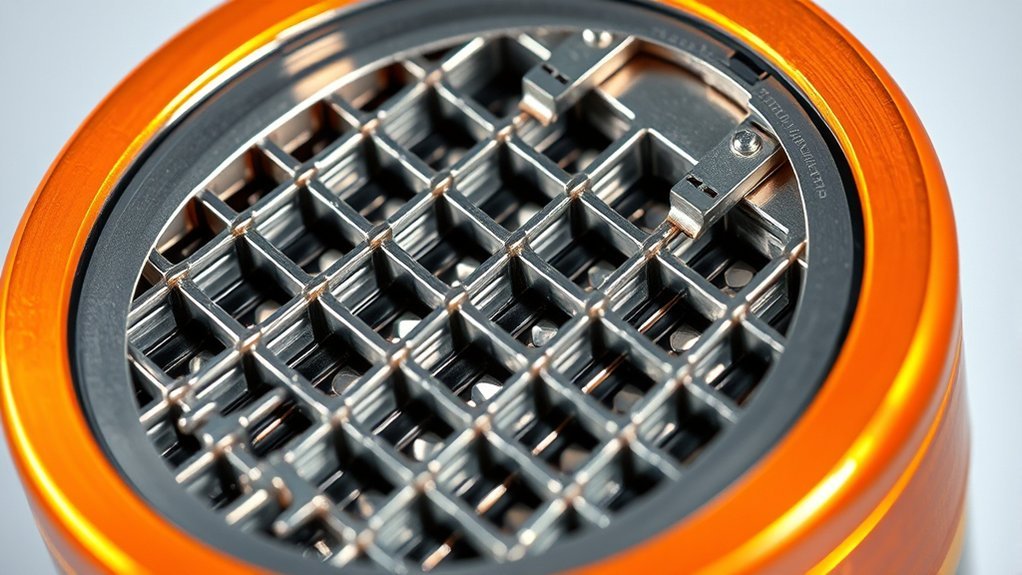
Understanding the chemistry behind LiFePO₄ batteries requires examining the fundamental electrochemical processes occurring within the cell. These processes involve lithium ions migrating between the cathode and anode during charge and discharge cycles, governed by specific chemical reactions. Key aspects include:
- Stable Crystal Structure: The olivine structure of LiFePO₄ provides exceptional thermal stability, enhancing battery safety and preventing thermal runaway.
- Electrochemical Stability: The phosphate-based cathode maintains consistent voltage, optimizing performance and longevity.
- Manufacturing Processes: Precise synthesis of cathode materials ensures uniformity, directly impacting safety, capacity, and cycle life.
How Lifepo4 Differs From Other Lithium-Ion Batteries
While many lithium-ion batteries share core principles, LiFePO₄ batteries distinguish themselves through their unique chemistry and performance characteristics. They offer enhanced thermal stability, reducing risks of thermal runaway, and have a longer cycle life, which benefits battery recycling efforts. Their higher structural stability results in a lower environmental impact during disposal. The table below highlights key differences:
| Feature | LiFePO₄ | Other Lithium-Ion | Impact |
|---|---|---|---|
| Thermal Stability | High | Moderate to Low | Safer, less environmental risk |
| Cycle Life | >2000 cycles | 500–1000 cycles | Better for recycling longevity |
| Environmental Impact | Lower due to stability | Higher, more degradation | Reduced waste and pollution |
Advantages of Lithium Iron Phosphate Chemistry for Battery Performance
Lithium Iron Phosphate chemistry offers notable advantages in thermal stability, reducing safety concerns during operation. Its longer cycle life stems from a stable crystal structure that withstands repeated charge and discharge cycles without significant degradation. These attributes collectively enhance overall battery performance and longevity.
Enhanced Thermal Stability
Because of its unique chemical structure, lithium iron phosphate (LiFePO4) exhibits considerably enhanced thermal stability compared to other lithium-ion chemistries. This stability translates into significant safety improvements, especially under extreme conditions. Specifically, LiFePO4 batteries:
- Resist thermal runaway, reducing the risk of fires and explosions.
- Maintain structural integrity at high temperatures, ensuring safer operation.
- Require less complex thermal management systems, lowering overall system costs.
This inherent thermal stability makes LiFePO4 ideal for applications demanding high safety standards. By limiting heat generation during charging and discharging, these batteries deliver consistent performance while minimizing safety hazards. Consequently, thermally stable chemistry enhances both reliability and safety, reinforcing LiFePO4’s role in critical energy storage solutions.
Longer Cycle Life
The inherent stability of LiFePO4 chemistry not only enhances safety but also considerably extends the battery’s operational lifespan. This stability reduces electrode degradation during charge-discharge cycles, resulting in a longer cycle life—often exceeding 2000 cycles with minimal capacity loss. Such durability improves overall performance and reduces the frequency of replacements, benefiting the supply chain by decreasing logistical costs. Additionally, the chemistry’s compatibility with battery recycling processes ensures that end-of-life batteries can be efficiently reclaimed, further supporting sustainability and resource management. This combination of longevity and recyclability makes LiFePO4 batteries particularly advantageous for high-demand, long-term applications, where durability directly correlates with cost-effectiveness and environmental impact mitigation.
Common Applications of LiFePO4 Technology and Why Chemistry Matters
LiFePO4 batteries are widely employed in electric vehicles, renewable energy storage, and portable power systems due to their stability and safety profile. Understanding the chemistry helps us optimize their performance and longevity in these applications. Recognizing these connections underscores why material properties directly influence practical functionality.
Electric Vehicle Usage
Electric vehicles (EVs) increasingly rely on LiFePO4 batteries due to their advantageous chemistry, which offers enhanced safety, longevity, and thermal stability. This chemistry directly impacts EV performance through:
- Battery safety – LiFePO4’s stable structure reduces thermal runaway risk, making it safer in crash scenarios.
- Manufacturing processes – Consistent quality control ensures robust cell integrity, essential for durability in high-demand applications.
- Longevity – The chemistry’s resistance to degradation extends cycle life, lowering replacement costs over vehicle lifespan.
These factors highlight why chemistry is critical for EV adoption, as it influences safety protocols and manufacturing standards. The inherent stability of LiFePO4 not only improves vehicle reliability but also aligns with industry goals for safer, more sustainable transportation options.
Renewable Energy Storage
Why has LiFePO4 chemistry become a preferred choice for renewable energy storage? Its inherent stability enhances battery safety, reducing risks of thermal runaway. The chemistry’s long cycle life and thermal stability make it ideal for grid storage, where reliability is critical. Additionally, recycling methods for LiFePO4 batteries are more environmentally friendly and efficient, supporting sustainable energy initiatives. Here’s a visual overview:
| Application | Key Benefits | Why Chemistry Matters |
|---|---|---|
| Grid Storage | Safety, longevity, stability | Thermal stability, minimal degradation |
| Residential Systems | Safety, recyclability | Non-toxic materials, recyclability |
| Commercial Installations | High cycle life, safety | Stable chemistry under frequent cycles |
| Utility-Scale Projects | Cost-effective, reliable | Long lifespan, robust design |
| Off-grid Power | Safety, durability | Resistance to environmental stress |
Portable Power Solutions
Portable power solutions have gained prominence due to the increasing demand for reliable, lightweight, and long-lasting energy sources in diverse environments. LiFePO4 batteries excel here because their chemistry guarantees stability and safety, essential for various applications. Consider these key factors:
- Efficiency and Safety: Their thermal stability reduces risks, making safety precautions easier to implement.
- Longevity and Recycling: Extended cycle life facilitates battery recycling, minimizing environmental impact.
- Versatility: Used in portable electronics, RVs, and emergency backup systems, where durability matters.
Understanding the chemistry behind LiFePO4 helps optimize performance and safety, especially in recycling processes. This guarantees responsible use and disposal, fundamental for sustainable portable power solutions. The chemistry’s inherent stability is indispensable, making LiFePO4 an ideal choice across multiple portable applications.
What Should You Know About Maintaining and Charging LiFePO4 Batteries?
Proper maintenance and charging practices are essential to maximize the lifespan and performance of LiFePO4 batteries. Ensuring battery safety involves adhering to strict charging protocols that prevent overcharging and deep discharges, which can compromise cell integrity. LiFePO4 batteries require a charger with a voltage cutoff specific to their chemistry, typically around 3.65V per cell. Maintaining consistent charge levels minimizes capacity fade and thermal risks. It’s vital to monitor temperature during charging, as excessive heat can impair safety and longevity. Regular inspections for physical damage or corrosion also support safety and performance. By following proper charging protocols and prioritizing battery safety, we optimize the operational lifespan of LiFePO4 batteries while maintaining their stable, high-performance characteristics.
Frequently Asked Questions
How Does Temperature Affect Lifepo4 Battery Performance?
Temperature markedly influences Lifepo4 battery performance through thermal stability; high temperatures hasten degradation, while low temperatures diminish capacity. Effective temperature regulation guarantees ideal operation, maintaining battery longevity and safety by preventing thermal runaway and preserving chemical integrity.
Are There Safety Risks Associated With Lifepo4 Batteries?
Like a well-guarded fortress, Lifepo4 batteries pose minimal safety risks when proper battery manufacturing and safety protocols are followed, ensuring structural integrity and preventing thermal runaway, making them reliably safe for various applications.
What Is the Lifespan of a Typical Lifepo4 Battery?
We find that Lifepo4 batteries typically last 2,000-5,000 charge cycles, emphasizing battery safety and recycling processes; their longevity depends on usage, temperature, and maintenance, making them a reliable, environmentally friendly energy storage option.
Can Lifepo4 Batteries Be Recycled Easily?
We see Lifepo4 batteries as resilient trees, yet recycling challenges hinder their full potential. Their environmental impact diminishes when we tackle these hurdles, making recycling more efficient and reducing waste, ultimately fostering a greener, more sustainable future.
How Does Depth of Discharge Impact Lifepo4 Battery Longevity?
We find that deeper depth cycles accelerate capacity fade, reducing lifespan; shallow discharges preserve capacity longer. Properly managing depth of discharge optimizes Lifepo4 battery longevity by minimizing capacity fade caused by frequent, deep cycling.
Conclusion
Understanding LiFePO₄ chemistry is like tuning a precision instrument—every component works harmoniously for optimal performance and safety. Just as a well-maintained engine runs smoothly, properly caring for these batteries guarantees longevity and efficiency. Our detailed exploration into the chemistry reveals that, with their stable structure and reliable electrochemical reactions, LiFePO₄ batteries are poised to power a sustainable future. Mastering this science helps us harness their full potential with confidence.