Neglecting proper charging practices, skipping routine inspections, or using incompatible equipment can all compromise the longevity and safety of Lifepo4 batteries. Overcharging, deep discharging, and poor temperature management accelerate chemical degradation and internal damage. Ignoring manufacturer guidelines or storage conditions further compounds these issues. Understanding these common mistakes is essential for maintaining peak performance and safety, making it vital to identify and correct these errors before they cause irreversible harm.
Key Takeaways
- Overcharging or deep discharging Lifepo4 batteries damages their chemical structure and reduces lifespan.
- Failing to use compatible chargers and incorrect settings can cause internal damage and capacity loss.
- Neglecting temperature monitoring and improper storage accelerate battery degradation and safety risks.
- Ignoring cell balancing during use leads to uneven performance and early failure.
- Not following manufacturer guidelines for charging, handling, and disposal shortens battery life and voids warranties.
Why Proper Charging Habits Are Crucial for Lifepo4 Batteries
Because Lifepo4 batteries rely on stable chemical reactions within their cells, maintaining proper charging habits is essential to preserve their longevity and performance. Overcharging or deep discharging can disrupt these reactions, leading to capacity loss and reduced cycle life. Consistent, ideal charging prevents voltage stress and minimizes thermal buildup, which can damage internal components. Proper charging also impacts the environmental impact of battery disposal; when maintained correctly, Lifepo4 batteries are more durable, reducing the frequency of replacement and promoting effective battery recycling. This minimizes hazardous waste and conserves resources. Adhering to correct charging protocols ensures the battery’s chemical stability, supports sustainable practices, and helps mitigate the environmental footprint associated with improper disposal of degraded batteries.
Overlooking Regular Battery Inspections and Maintenance Checks
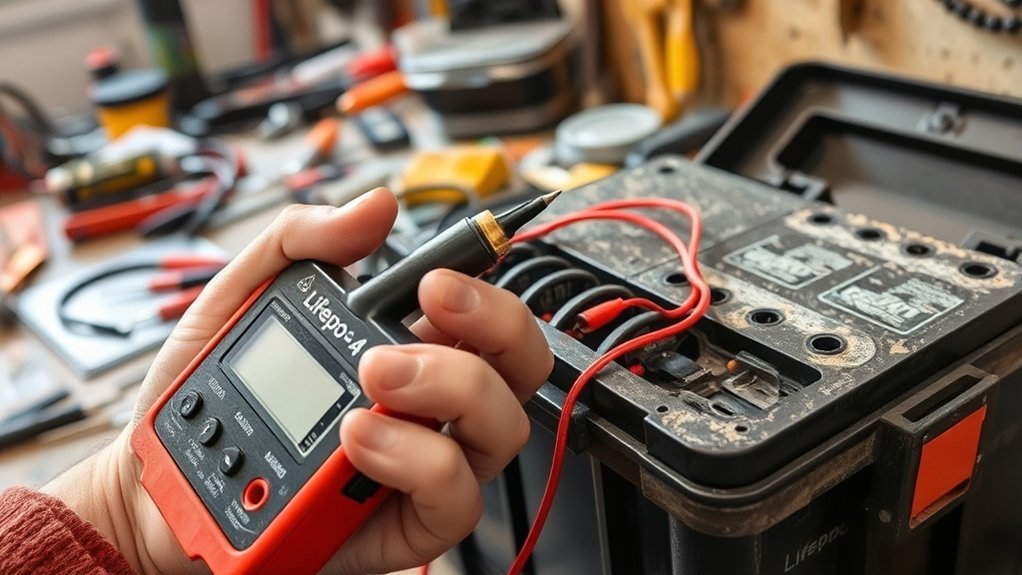
Regular battery inspections are essential for early detection of issues like corrosion, swelling, or loose terminals, which can compromise performance. Monitoring voltage fluctuations and performing capacity tests help identify capacity loss or internal degradation before failure occurs. Neglecting these checks increases the risk of unexpected downtime and reduces overall battery lifespan.
Neglecting Visual Battery Checks
Have we overlooked the importance of visual inspections in maintaining LiFePO4 batteries? Regular checks are essential for early detection of issues that could compromise performance. Visually inspecting the battery case helps identify cracks, swelling, or discoloration, indicating internal damage or overheating. It’s equally important to examine terminals for signs of corrosion, which can hinder electrical connections and reduce efficiency. Neglecting these inspections can lead to unnoticed deterioration and potential failures.
Key points include:
- Monitoring the battery case for physical damage or deformation
- Checking for terminal corrosion, rust, or loose connections
- Ensuring vents and drainage points are clear of debris
Consistent visual checks help maintain ideal function and extend battery lifespan by allowing timely intervention before problems escalate.
Ignoring Voltage Fluctuations
Ignoring voltage fluctuations can obscure early signs of battery degradation, making it crucial to conduct systematic inspections. Fluctuations in voltage signal changes in voltage stability and power regulation, essential for peak Lifepo4 performance. When voltage levels deviate from normal ranges, it may indicate internal cell imbalance, increased resistance, or aging effects that require prompt attention. Regular voltage monitoring allows us to detect such issues before they compromise overall battery health or cause failure. Precise measurement and analysis of voltage variations across cells help identify inconsistencies that could lead to uneven charge/discharge cycles. Maintaining consistent voltage stability is essential for extending battery lifespan and ensuring reliable power regulation. Neglecting these fluctuations risks unnoticed deterioration, potentially resulting in reduced capacity, efficiency loss, or catastrophic failure.
Skipping Capacity Testing
Why is it so crucial to perform capacity testing on Lifepo4 batteries regularly? Regular capacity testing identifies performance degradation before it leads to complete failure, enabling timely maintenance and ideal system operation. This proactive approach reduces risks associated with unexpected breakdowns, prolongs battery lifespan, and ensures reliable energy supply. Skipping these tests can cause unnoticed capacity loss, which can hamper efficient battery recycling processes and increase environmental impact due to premature disposal. Key points include:
- Detecting capacity fade early prevents unnecessary replacements and waste.
- Ensures batteries meet operational specifications, avoiding performance issues.
- Supports sustainable practices by maintaining battery health and minimizing environmental footprint.
Ignoring capacity testing jeopardizes battery longevity, increases waste, and complicates environmentally responsible recycling. Regular checks are essential for maintaining efficiency, safety, and sustainability in Lifepo4 battery management.
Using Incorrect Charging Equipment or Settings

Using incompatible charger types or incorrect voltage settings can lead to overcharging or undercharging Lifepo4 batteries, risking capacity loss or thermal runaway. Selecting a charger that doesn’t match the battery’s specifications may cause internal damage or reduced lifespan. Ensuring precise voltage and current parameters are set according to manufacturer guidelines is essential for maintaining ideal battery health.
Incompatible Charger Types
Have you ever considered how critical it is to match your charger to your Lifepo4 battery’s specifications? Using incompatible charger types can lead to inefficient charging, battery damage, and reduced lifespan. For example, using a charger with incorrect voltage or current ratings can cause overcharging or undercharging, risking thermal runaway or capacity loss. It’s vital to select chargers specifically designed for Lifepo4 chemistry, ensuring they have proper BMS integration and appropriate charge profiles.
- Avoid chargers with incompatible voltage/current ratings
- Verify the charger’s BMS supports Lifepo4 chemistry
- Use eco-friendly chargers to promote battery recycling and lessen environmental impact
Choosing the right charger helps optimize performance and supports sustainable practices, ultimately reducing hazardous waste and promoting responsible battery recycling.
Wrong Charging Voltage
Incorrect charging voltage—whether due to faulty equipment settings or incompatible chargers—poses a significant risk to Lifepo4 batteries. Overvoltage can cause thermal runaway, degrade cell chemistry, and reduce overall lifespan, while undervoltage hampers proper charging and capacity. Ensuring correct voltage settings is essential for charging safety and prolonging battery life. Using the wrong equipment not only endangers the battery but also complicates battery recycling efforts, as damaged cells become hazardous waste. To prevent these issues, always verify charger specifications and voltage parameters before connecting.
| Charging Voltage | Potential Consequences |
|---|---|
| Too high | Overheating, capacity loss |
| Too low | Incomplete charging, capacity decline |
| Correct | Safe operation, lasting lifespan |
Ignoring Optimal Storage Conditions for Lifepo4 Batteries
Neglecting to adhere to ideal storage conditions can considerably degrade Lifepo4 battery performance and lifespan. Proper storage requires maintaining stable environmental factors, especially temperature control, to prevent capacity loss and internal degradation. Fluctuations outside recommended ranges accelerate electrolyte decomposition and increase resistance.
Neglecting proper storage conditions accelerates degradation and shortens Lifepo4 battery lifespan.
Key considerations include:
- Temperature control: Store batteries in a cool, dry environment, ideally between 0°C and 25°C, to minimize thermal stress.
- State of charge: Keep batteries at approximately 40-60% charge during extended storage to reduce capacity fade.
- Humidity management: Avoid high humidity areas to prevent corrosion and moisture-related damage.
Adhering to these parameters ensures the battery remains stable and ready for effective use, preventing premature failure and extending overall lifespan.
Failing to Balance Cells During Use and Charging
Failing to balance cells during use and charging can lead to significant disparities in voltage and capacity among individual cells within a Lifepo4 battery pack. This cell imbalance causes uneven aging, reduces overall capacity, and risks overcharging protection failure. When cells are unbalanced, some may reach their voltage limit prematurely, while others remain undercharged, compromising pack efficiency. Proper balancing guarantees all cells maintain uniform voltage levels, preventing capacity loss and extending lifespan. The table below highlights key aspects:
| Aspect | Impact |
|---|---|
| Cell imbalance | Accelerates capacity fade, reduces lifespan |
| Overcharging protection | May be bypassed if cells are uneven |
| Use during charging | Increases risk of damage |
| Regular balancing | Maintains ideal performance |
Neglecting to Monitor Battery Temperature During Operation
Monitoring battery temperature during operation is essential for maintaining the safety and longevity of a Lifepo4 battery pack. Proper thermal management guarantees peak performance and prevents thermal runaway or degradation. Neglecting temperature regulation can lead to overheating, reducing cell lifespan and risking safety hazards. To guarantee effective thermal management, consider these key points:
- Use temperature sensors to continuously monitor cell and pack temperature during operation.
- Implement active cooling systems, such as fans or liquid cooling, to keep temperatures within manufacturer specifications.
- Regularly inspect temperature data logs to identify abnormal fluctuations indicating potential issues.
Discharging Batteries Too Deep or Too Frequently
Discharging a Lifepo4 battery beyond its recommended depth or with excessive frequency considerably impacts its overall health and lifespan. Overdischarge risks arise when the battery’s state of charge drops below the manufacturer’s specified cut-off voltage, leading to potential cell imbalance and capacity loss. Deep cycling, although generally safe for Lifepo4 chemistries, becomes detrimental when performed excessively or beyond recommended limits, accelerating capacity fade and reducing cycle life. Frequent deep discharges strain internal components and increase internal resistance, ultimately shortening the battery’s effective lifespan. To optimize longevity, it’s essential to avoid deep cycling unless necessary and to maintain discharge levels within the manufacturer’s prescribed range. Proper management of discharge depth and frequency is vital for preserving battery health and ensuring reliable performance over time.
Not Following Manufacturer Guidelines for Lifepo4 Battery Care
Adhering to the manufacturer’s guidelines is essential for maintaining the ideal performance and longevity of a Lifepo4 battery. Ignoring these instructions can lead to reduced capacity, shortened lifespan, and invalidated warranty claims. Proper care includes following specified charging voltages, avoiding over-temperature conditions, and adhering to recommended storage procedures. Failing to do so may result in irreversible damage requiring battery recycling or replacement. Additionally, neglecting manufacturer directives can complicate warranty claims, as improper handling often voids coverage. To maximize lifespan, users should:
- Strictly follow recommended charging and discharging procedures
- Use approved chargers and monitor temperature during operation
- Properly recycle batteries at end-of-life per local regulations, avoiding improper disposal that harms the environment and voids warranty protections
Frequently Asked Questions
How Can I Tell if My Lifepo4 Battery Is Damaged?
We check for damage by monitoring charging protocols and temperature management; if the battery won’t hold a charge, shows abnormal temperature rises, or exhibits inconsistent performance, these signs indicate potential damage requiring further testing or replacement.
What Are Signs of a Failing Lifepo4 Battery?
Signs of a failing Lifepo4 battery include swelling, inconsistent charging, and capacity loss. We recommend proper charging protocols and responsible battery recycling to prevent failures, ensuring peak performance and longevity through meticulous maintenance and monitoring.
Can Lifepo4 Batteries Be Stored Fully Charged?
We suggest storing Lifepo4 batteries at approximately 50% charge, following proper battery storage and charging best practices. Fully charged storage can lead to capacity loss, so maintaining ideal voltage levels ensures longevity and reliable performance over time.
How Often Should I Replace My Lifepo4 Batteries?
We recommend replacing Lifepo4 batteries after 2000 to 3000 charging cycles or when capacity drops below 80%, ensuring proper battery recycling; monitor performance closely, as increased cycle count and diminished capacity signal it’s time for replacement.
Are There Specific Tools Recommended for Battery Maintenance?
What tools do we need for battery maintenance? We recommend a multimeter for voltage checks, wire brushes for terminal cleaning, and inspection mirrors for terminal inspection—these guarantee precise diagnostics and proper maintenance, preventing faults and extending battery lifespan.
Conclusion
By avoiding these common mistakes, we safeguard the intricate chemical balance within our Lifepo4 cells, much like tending to delicate machinery. Regular inspections, proper charging, and mindful storage act as precise tools, ensuring each cell’s harmony and longevity. When we monitor temperature and prevent deep discharges, we protect the battery’s core structure, much like shielding a crucial, intricate engine. Through diligent maintenance, we keep our energy sources reliable, resilient, and ready to power our future.