Consider a scenario where a commercial EV fleet relies on LiFePO4 batteries that, despite their reputation for low maintenance, experience unexpected capacity loss after a year. This prompts the inquiry: do these batteries truly require minimal oversight, or are there specific care practices that can optimize their performance? Understanding the nuances of LiFePO4 maintenance is essential, as even small oversights could impact safety, efficiency, and lifespan over time.
Key Takeaways
- LiFePO4 batteries are low-maintenance but require proper handling and regular monitoring to ensure safety and optimal performance.
- Maintaining proper voltage levels and avoiding overcharging or deep discharges helps prolong their lifespan.
- Regularly checking temperature and voltage can prevent damage and ensure efficient operation.
- Proper storage in cool, dry environments at partial charge minimizes capacity loss over time.
- Using compatible chargers and following recommended charging practices support longevity and responsible recycling.
How Do LiFePO4 Batteries Work and What Makes Them Different?
LiFePO4 batteries operate through the movement of lithium ions between the anode and cathode during charge and discharge cycles, a process governed by electrochemical reactions that produce electrical energy. Their unique battery chemistry involves a stable phosphate-based cathode, which enhances safety and thermal stability. Compared to other lithium-ion chemistries, LiFePO4 offers a lower energy density, but this trade-off results in improved longevity and safety. The energy density is sufficient for many applications, but it’s less than that of cobalt or nickel-based batteries, making it suitable for stationary and portable use where safety and cycle life are prioritized. Understanding these fundamental differences helps explain why LiFePO4 batteries are favored for applications demanding reliable, long-term performance over maximum energy storage.
Are LiFePO4 Batteries Truly Low-Maintenance or Do They Need Care?
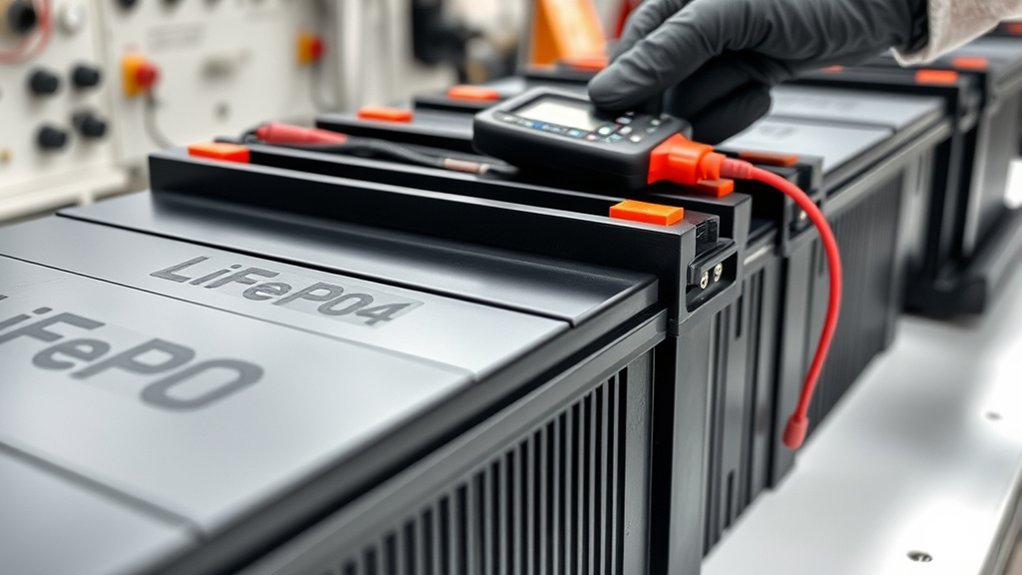
Although LiFePO4 batteries are often marketed as low-maintenance, they still require specific care to guarantee peak performance and longevity. Proper handling minimizes risks associated with safety and efficiency. Key considerations include:
- Regularly monitoring voltage and temperature to prevent overcharging or overheating, which can degrade cell chemistry.
- Conducting periodic battery recycling assessments to identify end-of-life units, reducing environmental impact.
- Ensuring proper storage conditions when not in use, as extreme temperatures can accelerate capacity loss and complicate disposal processes.
While LiFePO4 batteries are inherently low-maintenance, neglecting these aspects can lead to diminished lifespan and increased environmental impact due to improper disposal. Adequate care ensures sustainability and preserves the benefits of this advanced battery technology.
What Are the Best Practices for Maintaining LiFePO4 Batteries?
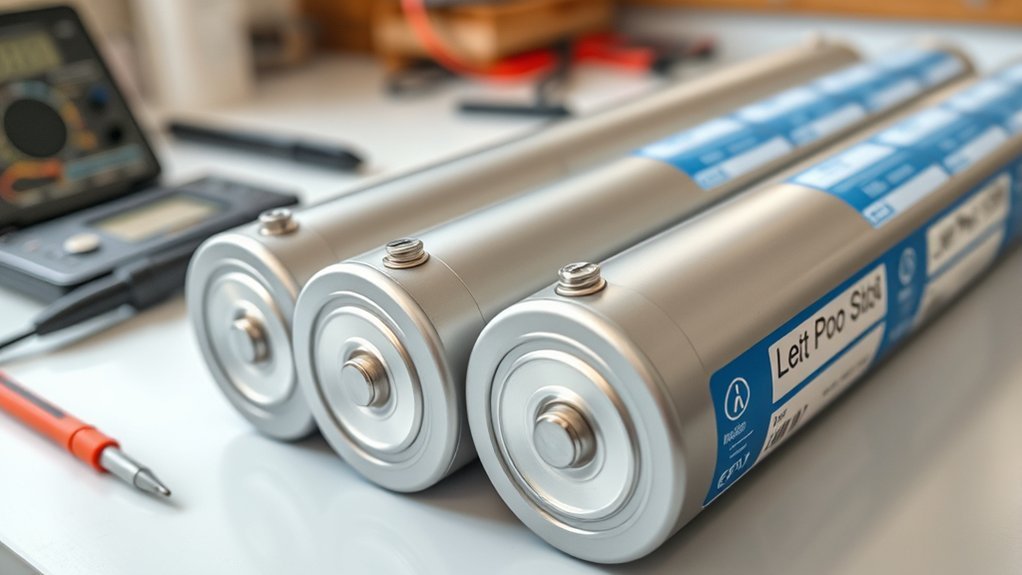
Maintaining LiFePO4 batteries requires consistent voltage monitoring to prevent over- or under-charge conditions that can compromise lifespan. Adhering to proper charging protocols guarantees ideal performance and longevity, while correct storage and handling minimize risks of damage and capacity loss. Implementing these best practices systematically helps maximize both safety and efficiency in battery management.
Regular Voltage Checks
Regular voltage checks are essential for ensuring the longevity and peak performance of LiFePO4 batteries. Consistent monitoring helps identify potential issues early, reducing the risk of capacity loss and prolonging service life. To maintain battery health, we recommend:
- Regularly measuring voltage levels with a calibrated multimeter to detect deviations from manufacturer specifications.
- Tracking voltage trends over time, which can signal aging or imbalance, impacting environmental impact and battery recycling processes.
- Using data to adjust maintenance schedules, preventing over-discharge that can compromise safety and sustainability.
Proper Charging Procedures
Proper charging procedures are critical to preserving the lifespan and safety of LiFePO4 batteries. Accurate charge management prevents overcharging, which can degrade battery chemistry and reduce capacity over time. Utilizing a charger with a balanced charging profile tailored to LiFePO4 chemistry ensures consistent voltage levels and minimizes stress on individual cells. Regularly monitoring charge cycles helps optimize lifespan and supports sustainable battery recycling practices, reducing environmental impact. Properly maintained charging protocols extend battery usability, decreasing the frequency of replacements and waste. Additionally, adhering to manufacturer specifications minimizes safety risks such as thermal runaway. By following precise charging procedures, we not only enhance battery performance but also promote environmentally responsible disposal, ultimately contributing to reduced electronic waste and supporting broader sustainability efforts.
Storage and Handling Tips
To guarantee LiFePO4 batteries retain peak performance over their lifespan, adopting best practices in storage and handling is essential. Proper storage minimizes capacity loss and reduces the environmental impact associated with battery recycling.
- Store batteries at a partial state of charge (around 50%) in a cool, dry environment to prevent capacity degradation.
- Avoid exposing batteries to extreme temperatures or moisture, which can accelerate aging and compromise safety.
- Handle batteries carefully to prevent physical damage, ensuring safety and ease of recycling at end-of-life. Proper handling and storage practices support the sustainability of LiFePO4 batteries, reducing waste and facilitating responsible disposal. This approach not only preserves performance but also aligns with environmental stewardship by minimizing the ecological footprint.
How Often Should You Check or Service Your LiFePO4 Battery?
While LiFePO4 batteries are known for their stability and longevity, establishing a consistent maintenance routine is essential to guarantee peak performance and safety. Regular checks should occur every 3 to 6 months, focusing on voltage, terminal connections, and overall health. Routine monitoring helps prevent potential issues that could lead to reduced efficiency or safety hazards. Proper maintenance also aligns with sustainable practices, emphasizing the importance of battery recycling and minimizing environmental impact. By periodically servicing your battery, you extend its lifespan and ensure safe disposal when it reaches end-of-life, reducing environmental harm. In this way, regular inspections are not just preventive but also environmentally responsible, supporting both efficient operation and ecological sustainability.
What Signs Indicate Your LiFePO4 Battery Needs Attention?
Identifying when your LiFePO4 battery requires attention is essential for maintaining optimal performance and safety. Signs of deterioration can also influence considerations for battery recycling and reducing environmental impact.
- Capacity Loss: A noticeable decrease in available charge indicates internal degradation, signaling the need for inspection or recycling processes.
- Voltage Irregularities: Fluctuating or abnormally low voltage levels suggest cell imbalance or damage, affecting both performance and environmental waste management.
- Overheating or Swelling: Excess heat or physical swelling signals potential safety hazards and the need for immediate attention to prevent environmental contamination from battery failure.
Monitoring these signs helps prevent premature disposal, promoting responsible battery recycling and minimizing environmental impact.
How Can Proper Charging Extend the Lifespan of LiFePO4 Batteries?
Maintaining ideal charging voltage levels prevents stress on LiFePO4 cells, thereby enhancing their longevity. Avoiding deep discharges minimizes capacity loss and reduces the risk of damage, ensuring consistent performance over time. Using proper charging equipment guarantees accurate current control and prevents voltage spikes that can compromise battery health.
Optimal Charging Voltage Levels
Proper charging voltage levels are critical for maximizing the lifespan of LiFePO4 batteries, as exceeding recommended voltages accelerates degradation of the cell chemistry. Maintaining ideal voltage not only prolongs cycle life but also reduces the environmental impact associated with battery disposal and recycling. To enhance performance:
- Keep charging voltage below 3.65V per cell to prevent overvoltage stress.
- Use chargers with precise voltage regulation to avoid fluctuations that can damage cells.
- Regularly monitor voltage levels during charging cycles to ensure adherence to manufacturer specifications.
Adhering to these voltage parameters minimizes capacity fade, enhances safety, and supports environmentally responsible battery recycling efforts, ultimately extending the functional lifespan of LiFePO4 batteries and reducing waste.
Avoiding Deep Discharges
Avoiding deep discharges is fundamental to preserving the longevity of LiFePO4 batteries, especially when combined with ideal charging practices. Deep discharges considerably reduce battery lifespan by stressing the cathode material and accelerating capacity fade. Maintaining discharges within a moderate range ensures better energy efficiency and prolongs usable cycle life. Proper management minimizes stress on the battery’s internal chemistry, reducing the risk of irreversible damage. Additionally, avoiding full discharges helps sustain peak voltage levels, which directly impacts energy efficiency during operation. This approach stabilizes the battery’s internal environment and prevents over-stressing, ultimately leading to more consistent performance over time. By adhering to these principles, we can maximize the battery’s lifespan while maintaining its energy efficiency, making it a worthwhile strategy for long-term system reliability.
Using Proper Charging Equipment
How does selecting the right charging equipment influence the lifespan of LiFePO4 batteries? Proper chargers guarantee ideal charge voltage and current, preventing overcharging and deep discharges that degrade battery health. Using compatible, high-quality chargers minimizes stress on the cells, extending cycle life and reducing the need for premature battery replacement. Additionally, efficient charging supports better battery recycling practices by reducing waste and environmental impact. To maximize benefits, consider these factors:
- Voltage and Current Compatibility: Use chargers specifically designed for LiFePO4 chemistry to avoid damaging voltage levels.
- Smart Charging Features: Select chargers with balancing and temperature regulation to maintain uniform cell health.
- Efficiency and Quality: Invest in certified, durable equipment that reduces energy waste and prolongs battery life, supporting sustainable battery recycling and environmental preservation.
Are There Common Mistakes That Shorten LiFePO4 Battery Life?
Many users inadvertently reduce the lifespan of LiFePO4 batteries by making common mistakes that compromise their performance and longevity. Overcharging or deep discharging beyond recommended levels accelerates capacity loss, leading to premature replacement and increased waste, impacting battery recycling efforts. Improper maintenance can also cause thermal stress, degrading cell chemistry and reducing cycle life. Neglecting to monitor voltage and current parameters risks unnoticed damage, which worsens over time. Additionally, neglecting the environmental impact of disposal hampers sustainable practices; improper disposal or recycling delays can introduce toxic materials into ecosystems. Recognizing these pitfalls emphasizes the importance of correct handling and maintenance, which not only prolongs battery life but also minimizes environmental footprint, supporting responsible usage and recycling initiatives.
Do LiFePO4 Batteries Require Special Storage or Handling?
LiFePO4 batteries do require specific storage and handling practices to maintain their performance and safety. Proper procedures help minimize risks, optimize lifespan, and reduce environmental impact.
Proper storage and handling of LiFePO4 batteries ensure safety, longevity, and environmental sustainability.
- Store at a partial state of charge—around 50%—to prevent capacity loss during long-term storage.
- Keep batteries in a cool, dry environment, avoiding extreme temperatures that can accelerate degradation or pose safety hazards.
- Handle with care to prevent physical damage, which complicates battery recycling and increases environmental risks. Proper handling facilitates battery recycling, reducing hazardous waste and supporting sustainability efforts. These practices ensure the batteries’ longevity while addressing environmental impact concerns, emphasizing the importance of responsible storage and handling in maintaining safety and ecological integrity.
Frequently Asked Questions
Can Lifepo4 Batteries Be Repaired if Damaged?
We believe Lifepo4 batteries can sometimes be repaired if damaged, focusing on repair procedures like cell replacement, but safety is vital. Proper battery recycling protocols should be followed, and professional assessment is recommended to guarantee peak performance and safety.
Do Temperature Variations Affect Lifepo4 Battery Performance?
Temperature variations dramatically impact LiFePO4 batteries, causing significant performance fluctuations. Maintaining temperature stability is essential, as even minor fluctuations can lead to severe performance impacts, emphasizing the need for precise thermal management in critical applications.
Are There Specific Brands With Better Maintenance Requirements?
We find that reputable brands with strong industry reviews generally require less frequent maintenance, thanks to superior quality and design. Regular maintenance frequency varies, but choosing well-known brands helps guarantee ideal performance and longevity with minimal upkeep.
How Do You Dispose of Old Lifepo4 Batteries Safely?
We dispose of old LiFePO4 batteries through certified battery recycling facilities, ensuring proper disposal safety. Statistically, only 5% of lithium batteries are properly recycled; prioritizing recycling reduces environmental impact and prevents hazardous material leakage.
Is There a Warranty Period for Lifepo4 Batteries?
Lifepo4 batteries typically have warranty coverage ranging from 2 to 10 years, depending on the manufacturer. Replacement policies are outlined in warranty terms, ensuring protection against manufacturing defects and early failures within the specified period.
Conclusion
In summary, caring for LiFePO4 batteries is like tending a delicate but resilient garden—consistent attention guarantees ideal performance and longevity. While they’re low-maintenance compared to other chemistries, adherence to proper charging, storage, and monitoring protocols is vital. By staying vigilant and proactive, we can release their full potential, much like nurturing a seed into a thriving plant. Proper care isn’t just recommended; it’s indispensable for maximizing efficiency and safety over time.