Maintaining the health of LiFePO4 batteries requires a clear understanding of their operational limits and proper handling procedures. We must optimize charging and discharging cycles, control temperature exposure, and guarantee accurate monitoring to prevent premature failure. These technical considerations are critical to maximizing performance and lifespan. To achieve this, it’s essential to address each aspect systematically, but the specifics can be complex—let’s explore the key strategies that can help extend your battery’s operational life.
Key Takeaways
- Store batteries at 50-70% charge in a cool, dry environment to prevent capacity loss.
- Avoid deep discharges below 20% to reduce stress and prolong lifespan.
- Use chargers designed for Lifepo4 chemistry, and prevent overcharging or rapid charging.
- Maintain optimal operating temperatures between 0°C and 25°C, using active cooling or heating if needed.
- Regularly monitor voltage, capacity, and temperature to detect issues early and ensure proper maintenance.
How Do Lifepo4 Batteries Work and Why Is Their Care Important?
Although Lifepo4 batteries are renowned for their stability and safety, understanding how they work is essential for maintaining their longevity. Their battery chemistry, based on lithium iron phosphate, provides a stable and safe energy storage solution. During operation, lithium ions move between the cathode and anode, facilitating charge and discharge cycles. This chemistry results in a high cycle life and thermal stability, reducing risks of overheating or thermal runaway. Proper care guarantees that the chemical processes within the cell remain efficient, preventing capacity loss over time. Since energy storage efficiency relies on stable electrochemical reactions, avoiding deep discharges and overcharging is critical. By understanding these mechanisms, we can optimize lifespan and performance, emphasizing the importance of careful handling and maintenance practices for Lifepo4 batteries.
Keep Your Battery Within the Optimal Temperature Range
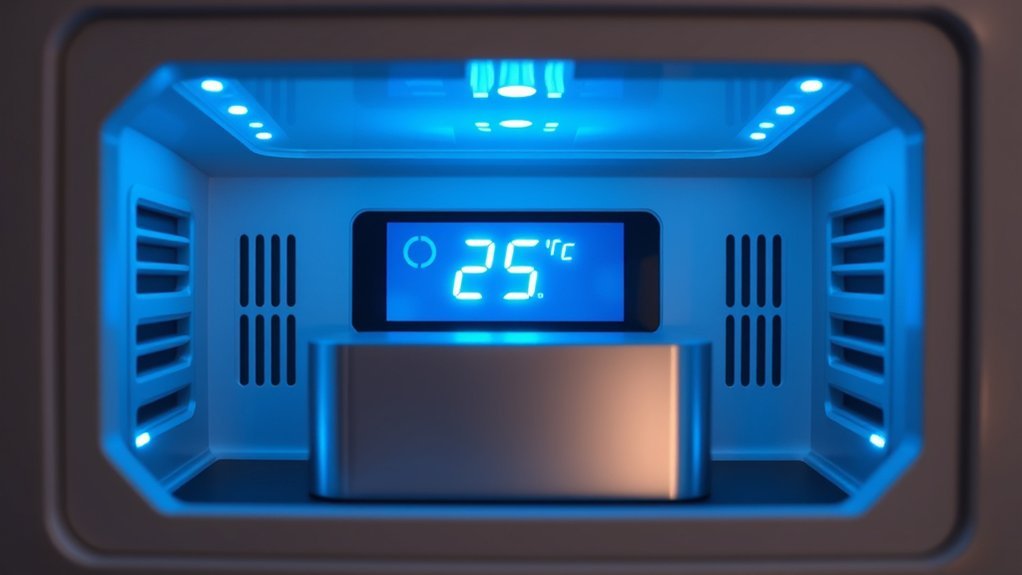
Maintaining Lifepo4 batteries within their ideal temperature range is essential for preserving their performance and extending their lifespan. Effective temperature regulation relies on precise thermal management, which helps prevent the detrimental effects of overheating or extreme cold. Elevated temperatures accelerate chemical degradation and capacity loss, while low temperatures impede ion mobility, reducing efficiency. Consequently, implementing active cooling or heating systems can stabilize battery temperature, ensuring consistent operation. Monitoring thermal conditions with sensors allows for real-time adjustments, minimizing thermal stress. Proper thermal management not only safeguards battery integrity but also maximizes charge-discharge cycles. By controlling the temperature environment, we can substantially enhance Lifepo4 battery longevity and reliability, making thermal regulation a critical component of overall battery health preservation.
Avoid Deep Discharges to Extend Battery Lifespan
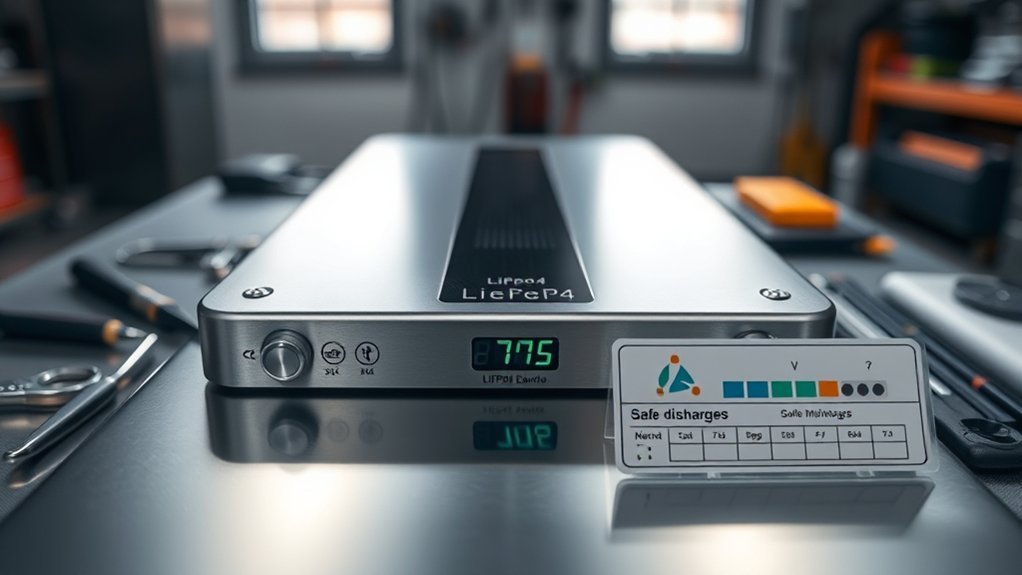
Preventing voltage drops below recommended levels is vital for minimizing stress on LiFePO4 cells and prolonging their service life. We should closely monitor battery levels and employ proper charging techniques to avoid deep discharges. Consistent adherence to these practices helps maintain ideal performance and extends overall battery lifespan.
Prevent Voltage Drops
To prolong the lifespan of LiFePO4 batteries, it’s essential to avoid deep discharges that cause significant voltage drops. Voltage stability is crucial for maintaining consistent power regulation and preventing stress on battery cells. Sharp voltage drops can lead to uneven cell wear and reduced capacity over time. Implementing proper discharge limits ensures the battery remains within safe voltage ranges, optimizing longevity.
| Discharge Level | Impact on Battery |
|---|---|
| Shallow Discharge | Maintains voltage stability, reduces stress |
| Deep Discharge | Causes voltage drops, accelerates aging |
| Key Focus | Benefits |
| Voltage Regulation | Ensures consistent output, prolongs lifespan |
| Power Regulation | Prevents voltage sag, enhances performance |
Monitor Battery Levels
Regularly monitoring battery levels is essential for avoiding deep discharges that can considerably shorten LiFePO4 battery lifespan. Proper monitoring guarantees timely intervention, preventing voltage drops that compromise cell integrity. Incorporating battery calibration periodically maintains accurate capacity readings, essential for reliable level alerts. These alerts notify us when the battery approaches critical thresholds, allowing for preventative action.
- Use digital monitors with precise level alerts for real-time data
- Calibrate batteries routinely to align voltage readings with actual capacity
- Track voltage and current trends to identify early signs of degradation
- Avoid discharging below 20% capacity to prevent long-term damage
Use Proper Charging Techniques
Proper charging techniques play a vital role in maintaining LiFePO4 battery health by avoiding deep discharges that can accelerate capacity loss. Repeated deep discharges increase the number of charging cycles, which accelerates degradation and shortens overall lifespan. To mitigate this, we recommend maintaining charge levels above 20% and not exceeding 80%, guaranteeing fewer full cycles and extended longevity. Additionally, regular battery calibration—periodically fully charging and discharging—helps enhance capacity measurement and prevents false state-of-charge readings. Using a charger designed for LiFePO4 chemistry ensures proper voltage regulation and reduces stress on the cells. By adhering to these charging practices, we minimize undue stress, extend battery lifespan, and preserve peak performance over time.
Use Proper Charging Practices for Lifepo4 Batteries
Proper charging practices are essential for maintaining Lifepo4 battery health, starting with ensuring the correct charging voltage to prevent stress on the cells. We must also avoid overcharging, which can lead to capacity loss or safety hazards, and maintain an appropriate charging rate to optimize lifespan. By adhering to these technical parameters, we can considerably extend the battery’s operational integrity.
Use Correct Charging Voltage
Ensuring the correct charging voltage is fundamental to maintaining Lifepo4 battery health, as exceeding the recommended limits can lead to capacity loss and potential safety hazards. Proper voltage management ensures optimal charging cycles and sustains voltage stability, which are critical for long-term performance. Overvoltage can cause undue stress on cells, accelerating degradation and reducing overall lifespan. Maintaining a consistent voltage prevents thermal runaway and mitigates risks associated with voltage fluctuations. It’s essential to use chargers specifically designed for Lifepo4 chemistry that adhere to manufacturer specifications. Proper voltage regulation supports balanced charging, preserves capacity, and enhances safety. In summary, precise control over charging voltage directly influences the longevity and reliability of Lifepo4 batteries.
- Ensures consistent voltage stability during charging
- Prevents overvoltage-induced capacity loss
- Extends the number of charging cycles
- Reduces safety risks linked to voltage fluctuations
Avoid Overcharging Risks
Overcharging Lifepo4 batteries can considerably accelerate capacity degradation and compromise safety. To mitigate this, implementing effective overcharge protection is essential, preventing voltage beyond recommended limits. Accurate battery calibration ensures the State of Charge (SoC) readings remain precise, avoiding inadvertent overcharging. Proper charging practices involve adhering strictly to manufacturer specifications, utilizing chargers with built-in safeguards, and routinely verifying system settings. The table below highlights key aspects:
| Aspect | Importance | Implementation |
|---|---|---|
| Overcharge protection | Prevents voltage overshoot, reduces safety risks | Use chargers with auto shut-off or overvoltage cutoff |
| Battery calibration | Ensures accurate SoC readings, prevents overcharge | Regular calibration cycles with known charge levels |
| Charging voltage | Maintains safe voltage levels | Follow manufacturer guidelines |
| Monitoring systems | Detects anomalies early | Install real-time monitoring tools |
| Maintenance checks | Sustains overall health | Schedule routine inspections |
Maintain Proper Charging Rate
Adhering to recommended charging rates is critical for maintaining Lifepo4 battery health and maximizing performance. Proper charging speed ensures the battery’s chemistry remains stable, preventing stress and capacity degradation. Excessively high charging rates can cause temperature spikes and accelerate aging, while slow charging may lead to incomplete balancing. Power fluctuations during charging can disrupt the stability of the process, risking internal damage. To maintain peak health, we recommend:
- Using chargers with specified current limits
- Avoiding rapid charging beyond manufacturer guidelines
- Monitoring voltage and temperature regularly
- Ensuring a stable power source to minimize fluctuations
Following these practices helps sustain battery longevity, reduces risk of thermal runaway, and preserves overall capacity. Proper management of charging speed is essential for reliable, long-term Lifepo4 battery performance.
Store Your Battery Correctly When Not in Use
When not in use, storing your Lifepo4 battery properly is vital to maintaining its long-term health. Effective battery storage involves controlling environmental conditions to minimize degradation. Temperatures should be kept between 0°C and 25°C, as extreme heat accelerates capacity loss and cold temperatures can cause voltage fluctuations. Humidity levels must also be managed; high humidity increases corrosion risk, while dry environments help preserve cell integrity. It’s best to store the battery in a fully charged state—around 50-70%—to prevent capacity fade caused by over-discharge or overcharge during storage periods. Additionally, avoiding direct sunlight and ensuring the battery is isolated from conductive materials minimizes thermal and electrical stresses. Proper battery storage practices are essential for optimizing lifespan and performance when the battery is not actively in use.
Regularly Monitor and Maintain Your Battery’s Health
To effectively maintain your Lifepo4 battery’s health, we must regularly monitor its voltage, capacity, and overall performance metrics. Consistent measurement helps identify early signs of degradation, preventing capacity loss and ensuring safety. We should track voltage levels during charge and discharge cycles, as abnormal fluctuations may indicate internal issues. Capacity testing reveals remaining usable energy, guiding proper usage and eventual recycling decisions. Monitoring temperature and internal resistance provides insights into potential thermal or electrochemical problems. When a battery nears end-of-life, proper battery recycling becomes essential to prevent environmental harm and recover valuable materials. Regular checkups enable informed decisions about maintenance or recycling, ultimately extending battery life and optimizing performance. This approach guarantees sustainable use and responsible disposal within the Lifepo4 ecosystem.
Frequently Asked Questions
Can Lifepo4 Batteries Be Recycled Safely?
Yes, Lifepo4 batteries can be recycled safely through proper battery disposal and a controlled recycling process that isolates hazardous components, ensuring environmental safety and resource recovery. We recommend following certified recycling protocols for responsible disposal.
How Do Different Brands of Lifepo4 Batteries Compare?
Coincidentally, brand comparison reveals notable differences in Lifepo4 batteries; we analyze specifications like capacity, cycle life, and safety features, discovering that while some excel in durability, others prioritize cost-efficiency, guiding informed, technical choices for diverse applications.
What Are Signs of a Failing Lifepo4 Battery?
We observe signs like reduced capacity, longer charging times, and voltage drops indicating a failing Lifepo4 battery. Poor charging habits and exceeding recommended cycle counts accelerate these issues, ultimately shortening battery lifespan and diminishing overall performance.
Does Temperature Fluctuation Affect Battery Performance Long-Term?
Temperature fluctuations negatively impact Lifepo4 battery performance long-term, as thermal stability and effective temperature regulation are vital. We observe that consistent, moderate temperatures preserve capacity and lifespan, preventing degradation caused by thermal stress and extreme environmental changes.
Are There Specific Tools Needed for Battery Maintenance?
We need essential tools like battery testers and voltage monitors for maintenance; studies show proper testing extends battery lifespan by up to 25%. These tools help us identify issues early, ensuring ideal performance and long-term health.
Conclusion
By adhering to proper handling, maintaining ideal temperatures, avoiding deep discharges, practicing correct charging, and monitoring our batteries regularly, we safeguard their longevity, guarantee consistent performance, and maximize their lifespan. Proper care isn’t just about preserving capacity; it’s about enhancing efficiency, reducing costs, and extending operational reliability. Ultimately, diligent maintenance and mindful usage form the foundation for sustainable, high-performing LiFePO4 batteries, empowering us to achieve long-term value through disciplined stewardship.