Did you know that proper voltage management is critical for maximizing Lifepo4 battery lifespan in RV applications? Many owners overlook the importance of maintaining cells at around 3.65V and using compatible CC/CV chargers, which can considerably impact performance and longevity. Properly managing charge levels, storage conditions, and monitoring health metrics can prevent early degradation. Understanding these technical details ensures your system remains reliable, but there are specific practices and signs to watch for that you might not be aware of.
Key Takeaways
- Keep batteries charged to 50-80% and avoid deep discharges for longevity.
- Store in a cool, dry environment at around 40-50% state of charge.
- Regularly monitor voltage, temperature, and internal resistance to detect early issues.
- Use a compatible charger and ensure terminals are clean and secure.
- Perform periodic balancing with a Battery Management System (BMS) to maintain health.
How to Properly Charge and Store Your Lifepo4 Batteries
Proper charging and storage of LiFePO4 batteries are essential to maximize their lifespan and guarantee reliable performance. Understanding battery chemistry is vital, as LiFePO4 cells tolerate more charging cycles than other chemistries, but improper handling accelerates degradation. Always charge to a recommended voltage, typically around 3.65V per cell, to prevent overvoltage stress. Using a compatible charger with a CC/CV (constant current/constant voltage) profile ensures safe, efficient charging. When storing, keep batteries in a cool, dry environment, ideally at 40-50% state of charge, to minimize capacity loss over time. Regularly inspect and top off the charge if stored long-term. Properly managing charging cycles and storage conditions preserves capacity, extends lifespan, and maintains the reliability of your RV’s LiFePO4 batteries.
Monitoring and Maintaining Battery Health Regularly
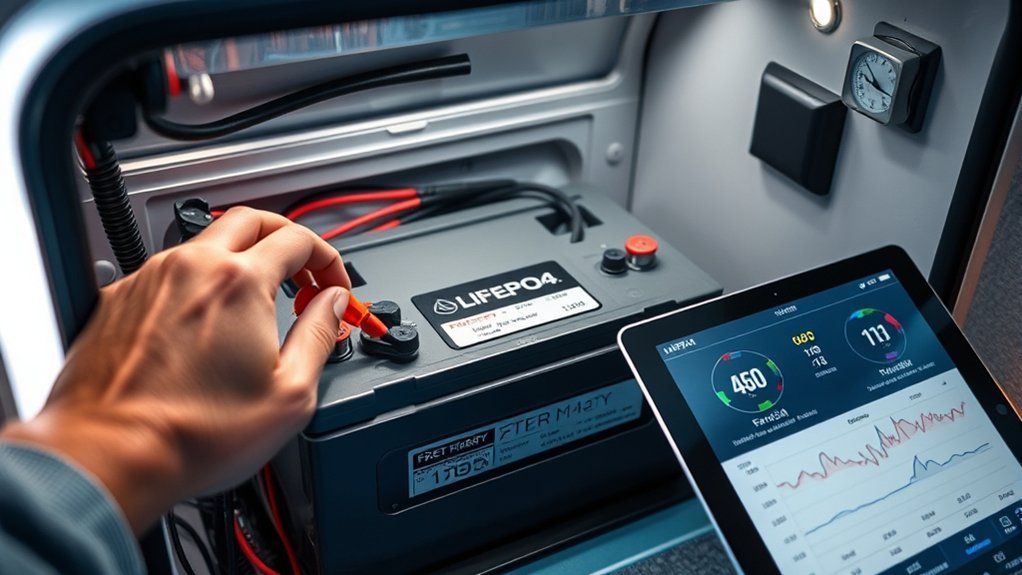
Regularly monitoring the health of your LiFePO4 batteries guarantees peak performance and longevity. Understanding battery chemistry allows us to track voltage levels, temperature, and state of charge accurately, assuring ideal conditions for each charging cycle. Consistent measurement of parameters such as internal resistance and capacity helps identify early signs of degradation. Maintaining detailed logs of charging cycles provides insight into the battery’s lifecycle, revealing patterns that could indicate potential issues. By monitoring these factors, we can prevent over-discharge and undercharge, which compromise cell integrity. Precise monitoring enables timely interventions, prolonging battery lifespan and maintaining efficiency. Employing specialized tools like battery analyzers and monitoring systems ensures that health assessments are accurate, fostering reliable operation and maximizing the lifespan of your RV’s LiFePO4 power system.
Managing Your RV’s Power Usage to Extend Battery Life
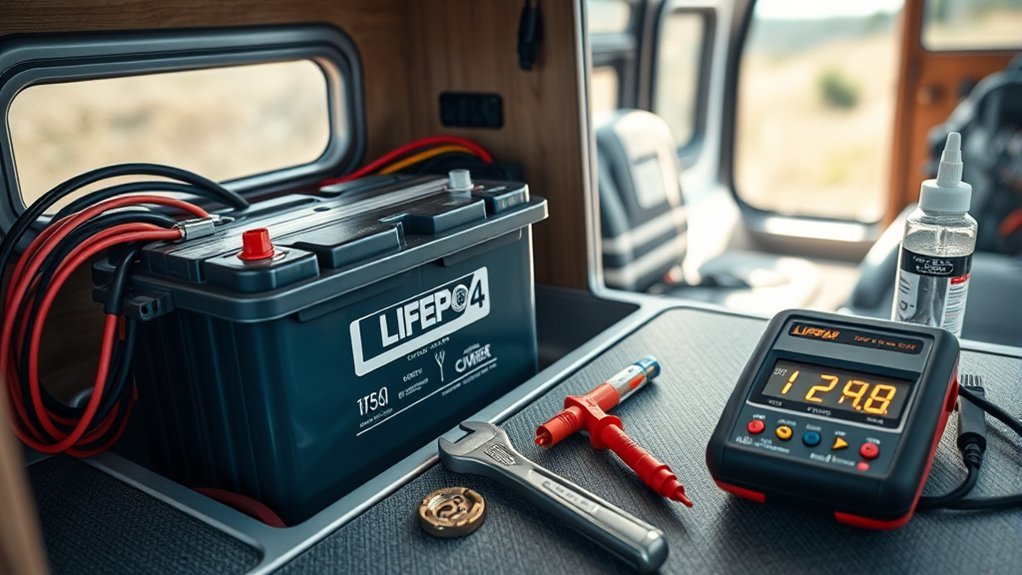
To maximize the lifespan of your RV’s LiFePO4 batteries, managing power consumption effectively is essential. Battery chemistry influences how these batteries handle charge and discharge cycles; LiFePO4 cells tolerate deep discharges better than other chemistries, but excessive cycling accelerates capacity loss. To extend battery life, we should minimize unnecessary power draw, especially during peak charging cycles. Using energy-efficient appliances and monitoring usage helps prevent frequent deep discharges, reducing stress on the battery. Regularly balancing the cells and avoiding high current draws during charging cycles also preserves capacity. Maintaining a consistent charge level—preferably around 50-80%—limits strain on the battery chemistry, prolonging cycle life. Smart load management and disciplined charging practices are key to optimizing battery longevity.
Troubleshooting Common Lifepo4 Battery Issues
While Lifepo4 batteries are known for their stability and longevity, they can still encounter common issues that impact performance and lifespan. Troubleshooting begins with evaluating battery safety, confirming terminals are secure and there’s no corrosion. Next, verify charging compatibility: using the correct charger voltage and current prevents overcharging or undercharging. Third, monitor for voltage irregularities, such as sudden drops indicating internal faults. Finally, check for temperature fluctuations, as excessive heat or cold can impair function and safety. Addressing these issues promptly maintains ideal performance and extends battery life. Proper troubleshooting safeguards against potential hazards and ensures the system operates efficiently, aligning with best practices for battery safety and reliable operation.
Best Practices for Long-Term Lifepo4 Battery Care
Proper long-term care of Lifepo4 batteries involves implementing specific maintenance practices that preserve their performance and lifespan. Regular voltage balancing ensures uniform cell charge levels, preventing capacity loss and extending cycle life. Monitoring voltage levels and employing a Battery Management System (BMS) can facilitate this process. Additionally, responsible battery recycling is vital for environmental sustainability; when batteries reach the end of their lifespan, proper recycling prevents hazardous waste and recovers valuable materials. Consistent maintenance, including avoiding deep discharges and storing batteries in a cool, dry environment, further preserves their health. Adhering to these best practices optimizes battery longevity and performance, guaranteeing reliable power for your RV while supporting environmentally conscious disposal and recycling protocols.
Frequently Asked Questions
How Often Should I Replace My Lifepo4 RV Batteries?
We typically replace our Lifepo4 RV batteries after about 2000-3000 charging cycles, as their lifespan diminishes considerably afterward. Regular maintenance and monitoring help optimize performance, but eventual replacement depends on capacity loss and usage conditions.
Can Lifepo4 Batteries Be Used in Cold Weather?
In cold weather, Lifepo4 batteries maintain better performance than traditional types, but still experience reduced capacity. We recommend installing battery insulation and using a battery heater, ensuring ideal performance and longevity during frigid RV adventures.
What Safety Precautions Are Needed for Lifepo4 Battery Maintenance?
We guarantee safety by insulating batteries to prevent thermal issues and maintaining proper ventilation to avoid gas buildup. Regular inspections for corrosion and secure connections are essential, along with following manufacturer guidelines for safe handling and charging practices.
How Do I Dispose of Old Lifepo4 Batteries Properly?
We investigate the environmental impact of disposing of old Lifepo4 batteries by following proper recycling processes. Always take them to authorized recycling centers, ensuring safe, eco-friendly handling that prevents hazardous materials from entering the environment and supports sustainable practices.
Are There Specific Brands Recommended for RV Lifepo4 Batteries?
We recommend brands like Battle Born and Renogy for RV Lifepo4 batteries, as they offer reliable battery capacity, robust construction, and high-quality engineering to withstand numerous charging cycles, ensuring ideal performance and longevity in your RV setup.
Conclusion
By following these maintenance practices, we guarantee our Lifepo4 batteries perform at their best and last longer. Think of it as tending a finely tuned engine—regular care prevents breakdowns and maximizes efficiency. With disciplined charging, vigilant monitoring, and prudent power management, we safeguard our investment and enjoy reliable RV adventures. Ultimately, proactive maintenance transforms our batteries from mere components into trusted companions on every journey, turning technical precision into peace of mind.