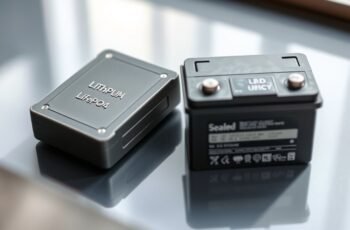
Studies show that Lifepo4 batteries typically last 2-3 times longer than lithium-ion variants, making them a compelling choice for durability-focused applications. Yet, the decision isn’t straightforward, as factors like safety, cost, and energy density vary considerably between the two. Understanding these differences is essential for selecting the best battery type aligned with your specific needs, but steering through these considerations can be complex without a clear framework.
Key Takeaways
- Choose Lifepo4 for safer, more stable batteries with longer lifespan and easier recycling, ideal for stationary and EV applications.
- Opt for Lithium-ion when higher energy density and lighter weight are critical, especially in portable or weight-sensitive devices.
- Consider Lifepo4 if safety and environmental impact are priorities, as it has lower fire risk and is more eco-friendly.
- Select Lithium-ion if you need compact, high-capacity batteries with quick charging capabilities, despite shorter cycle life.
- Balance initial cost versus long-term benefits: Lifepo4 has higher upfront costs but offers better durability and lower disposal concerns.
How Do Lifepo4 and Lithium-Ion Batteries Differ in Chemistry and Performance?
Although both Lifepo4 and lithium-ion batteries rely on lithium-based chemistries, their fundamental differences in electrode materials lead to distinct performance characteristics. Lifepo4 batteries utilize lithium iron phosphate as their cathode, offering a stable electrochemical composition that enhances safety and longevity. In contrast, typical lithium-ion batteries often use layered metal oxides like lithium cobalt oxide, which provide higher energy density but lower thermal stability. This variation impacts energy density considerably; lithium-ion batteries generally store more energy per unit weight, making them suitable for portable applications. Lifepo4’s electrochemical composition results in lower energy density but superior thermal stability and cycle life. Understanding these chemistry-driven distinctions helps in evaluating performance parameters critical for specific applications.
Which Battery Type Is Safer for Your Applications?
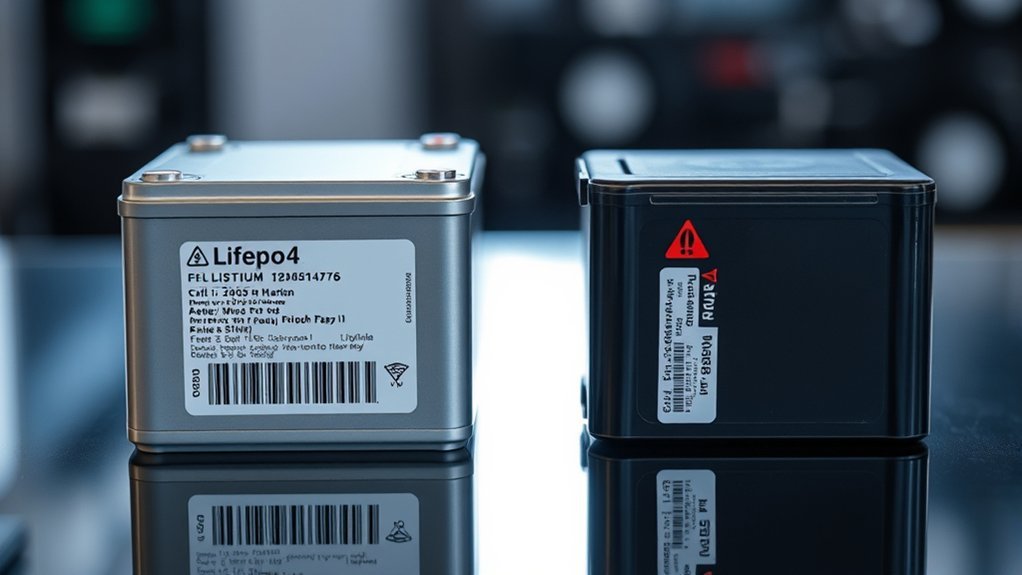
When evaluating the safety of Lifepo4 and lithium-ion batteries for various applications, their chemistry and thermal stability are crucial. Lifepo4 batteries are inherently more thermally stable, reducing risks of thermal runaway and fire. Lithium-ion batteries, however, are more prone to overheating if damaged or improperly managed. Regarding environmental impact, Lifepo4 batteries are easier to recycle and pose fewer hazards during battery recycling, minimizing ecological concerns. The table below highlights differences:
| Feature | Lifepo4 | Lithium-Ion |
|---|---|---|
| Thermal stability | Higher | Lower |
| Battery recycling | Safer, simpler | More complex, hazardous |
| Environmental impact | Lower | Higher |
How Do Lifepo4 and Lithium-Ion Batteries Compare in Cost and Longevity?
When comparing Lifepo4 and lithium-ion batteries, initial purchase cost is a key factor, but it doesn’t tell the whole story. We must also consider cycle life and how durability impacts long-term expenses. By analyzing these points, we can determine which battery type offers better cost efficiency over its lifespan.
Initial Purchase Price
How do Lifepo4 and lithium-ion batteries compare in initial cost and longevity? Generally, Lifepo4 batteries have a higher upfront price, but their longevity and safety features often justify the investment. The cost comparison indicates that lithium-ion batteries tend to be less expensive initially but may require replacement sooner. Brand reputation plays a vital role; trusted brands typically offer more reliable products with consistent quality.
- Lifepo4 batteries often cost 20-30% more at purchase but offer longer-term savings
- Lithium-ion prices are lower initially but might incur higher replacement costs
- Lifepo4’s reputation for stability enhances value despite higher initial expense
- Lithium-ion’s shorter lifespan can diminish its initial affordability
- Brand reputation influences both pricing and perceived reliability in both types
Cycle Life Durability
Lifepo4 batteries generally outperform lithium-ion counterparts in cycle life durability, making them a more cost-effective choice over time. They typically endure 2,000 to 3,000 cycles, compared to 500–1,000 for lithium-ion. This extended lifespan reduces replacement frequency, positively impacting battery recycling efforts and lowering environmental impact. The durability stems from chemical stability, which also minimizes capacity fade. The table below highlights key differences:
| Aspect | Lifepo4 | Lithium-Ion |
|---|---|---|
| Cycle Life | 2,000–3,000 cycles | 500–1,000 cycles |
| Environmental Impact | Easier recycling, less degradation | More complex recycling, higher degradation |
This durability advantage enhances sustainability and long-term performance.
Long-Term Cost Efficiency
Although initial purchase costs for Lifepo4 batteries are typically higher than those for lithium-ion models, their superior longevity and stability translate into lower total cost of ownership over time. Lifepo4 batteries often outperform lithium-ion in cycle life, reducing replacement frequency. Their durability minimizes environmental impact by decreasing waste and the need for frequent battery recycling. Additionally, Lifepo4’s thermal stability enhances safety, lowering potential maintenance costs. Conversely, lithium-ion batteries tend to degrade faster, leading to higher long-term expenses. The extended lifespan of Lifepo4 batteries also means fewer replacements, reducing resource consumption and environmental footprint. Ultimately, when analyzing cost efficiency, Lifepo4’s durability and recyclability make it a more sustainable and economically advantageous choice.
Which Battery Is Better Suited for Solar Systems or Electric Vehicles?
When evaluating batteries for solar systems or electric vehicles, selecting the right chemistry hinges on specific performance criteria and application demands. Lifepo4 batteries often outperform lithium-ion in terms of safety, longevity, and thermal stability, making them well-suited for these applications. They also offer advantages in battery recycling, as Lifepo4’s more stable chemistry simplifies disposal and reduces environmental impact. Conversely, lithium-ion batteries typically have higher energy density, which benefits weight-sensitive uses like electric vehicles. However, their environmental impact is greater due to more complex recycling processes and potential toxicity. Ultimately, Lifepo4’s durability and eco-friendliness make it a compelling choice for sustainable solar and EV applications, while lithium-ion’s higher energy density may appeal where space and weight are critical constraints.
What Factors Should Influence Your Choice Between Lifepo4 and Lithium-Ion?
Selecting the appropriate battery chemistry depends on a combination of technical requirements, environmental considerations, and application-specific priorities. When choosing between Lifepo4 and lithium-ion, factors like battery size, safety features, lifespan, cost, and environmental impact are critical. Lifepo4 batteries generally offer a more stable chemical composition, reducing safety risks and environmental footprint, especially in disposal. Lithium-ion batteries may provide higher energy density, allowing for smaller battery sizes but often at a higher environmental impact during manufacturing and disposal. Additionally, operational temperature ranges and cycle life influence longevity and reliability. Understanding these factors helps determine the best fit for your needs, whether prioritizing safety, longevity, or minimizing environmental effects. The decision ultimately hinges on balancing these technical and environmental considerations.
How Can You Ensure You Pick the Right Battery for Your Needs?
How can you guarantee you pick the right battery for your needs? First, evaluate your application’s power requirements, cycle life, and charging protocols. Consider the environmental impact, including battery recycling options and disposal methods, to minimize ecological harm. Lifepo4 batteries generally offer superior safety and a longer lifecycle, reducing waste and supporting better battery recycling practices. Lithium-ion batteries, while common, pose higher risks of thermal runaway and may have a more substantial environmental footprint due to hazardous materials. Analyzing these factors helps determine the most sustainable and efficient choice. Ultimately, aligning your specific energy needs with the battery’s performance, safety features, and environmental considerations ensures an informed, responsible decision.
Frequently Asked Questions
Are Lifepo4 Batteries More Environmentally Friendly Than Lithium-Ion?
Lifepo4 batteries are more environmentally friendly than lithium-ion, thanks to their longer battery lifecycle and safer materials. Though initially costlier, their durability reduces environmental impact over time, making them a more sustainable choice overall.
How Do Temperature Ranges Affect Lifepo4 and Lithium-Ion Batteries?
Like a delicate dance, temperature swings challenge battery lifespan and thermal stability. Lithium-ion batteries are more sensitive, risking reduced capacity in extreme heat or cold, whereas Lifepo4 offers superior thermal stability, extending lifespan across diverse temperature ranges.
Can Lifepo4 Batteries Be Recycled Easily?
Lifepo4 batteries can be recycled, but the process is more complex and less widespread than with lithium-ion, impacting overall lifespan and cost comparison. Improved recycling methods could enhance sustainability and reduce long-term costs for Lifepo4 batteries.
Which Battery Type Has a Faster Charging Time?
Like a swift racehorse, Lithium-ion batteries charge faster, enhancing efficiency. Lifepo4 batteries, with their longer lifespan, focus on durability. For rapid charging, lithium-ion wins; for longevity, Lifepo4 prevails, balancing technical advantages.
How Do Weight and Size Compare Between the Two Battery Types?
We find LiFePO4 batteries are generally heavier and larger than lithium-ion, impacting portability. Their longer battery lifespan and cost comparison favor Lifepo4, making it a more practical choice for weight-sensitive applications with durability needs.
Conclusion
In the end, choosing the right battery boils down to understanding your specific needs and priorities. While Lifepo4 excels in safety and longevity, lithium-ion offers higher energy density for portable applications. We believe it’s crucial to weigh factors like cost, environmental impact, and application demands carefully. Remember, you don’t want to put all your eggs in one basket—thorough analysis ensures you make an informed decision that truly pays off in the long run.