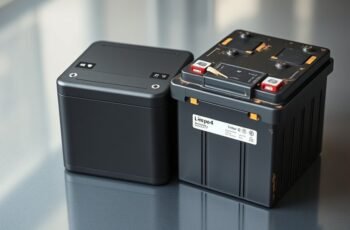
When comparing LiFePO4 and AGM batteries, understanding their fundamental differences in chemistry, performance, and application suitability is crucial. Each type offers unique advantages and limitations that can markedly impact long-term efficiency and sustainability. As we analyze these options, we’ll explore critical factors like lifespan, cost, safety, and environmental impact, which are important for making an informed decision tailored to specific energy needs. The choice ultimately hinges on understanding these technical nuances.
Key Takeaways
- Lifepo4 batteries offer longer lifespan, higher cycle count, and better thermal stability compared to AGM batteries.
- AGM batteries are generally cheaper upfront but have shorter durability and more environmental concerns.
- Lifepo4 has higher energy density, making it lighter and more suitable for portable and space-constrained applications.
- AGM batteries are more maintenance-free and perform well in short-term backup or less demanding use cases.
- Lifepo4 is environmentally friendlier, easier to recycle, and supports sustainable resource use over AGM’s toxic lead components.
What Are LiFePO4 and AGM Batteries? An Overview
LiFePO4 and AGM batteries are two prevalent types of rechargeable batteries used in various applications, each with distinct chemical compositions and performance characteristics. The underlying battery chemistry markedly influences their operation, especially in terms of charging efficiency. LiFePO4 batteries utilize lithium iron phosphate chemistry, offering high charge acceptance and stable voltage profiles, which enhance charging efficiency over time. AGM batteries, a type of lead-acid, employ absorbed glass mat technology to improve charge acceptance and reduce sulfation. These differences impact overall performance, with LiFePO4 batteries providing faster, more efficient charging cycles, whereas AGM batteries tend to have slower charge times but are cost-effective. Understanding these chemical and efficiency distinctions helps in selecting the appropriate battery type for specific applications.
How Do Lithium Iron Phosphate and AGM Batteries Work?
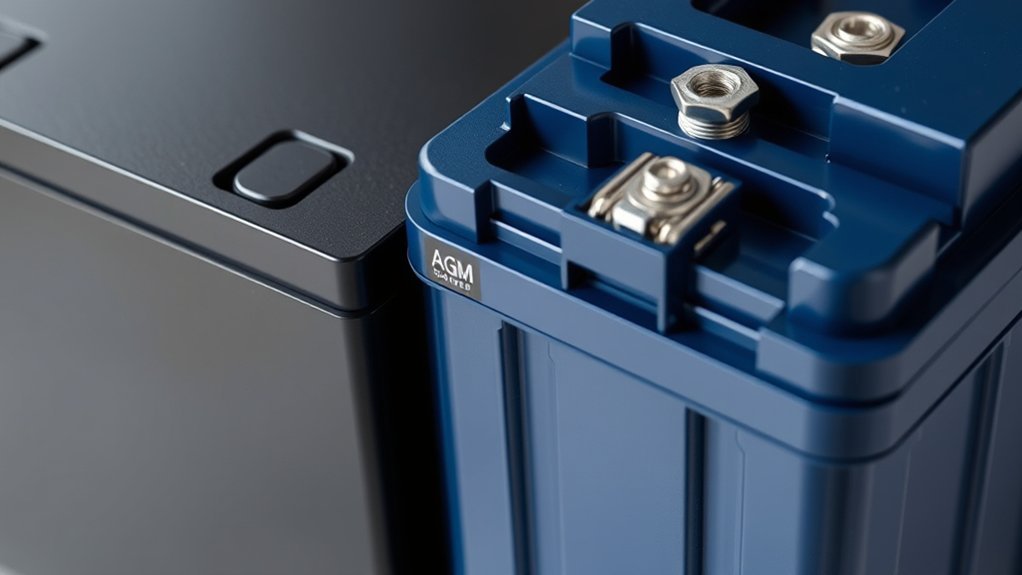
Understanding how Lithium Iron Phosphate (LiFePO4) and AGM batteries operate requires examining their chemical compositions and internal structures, which influence their energy storage mechanisms. We’ll also analyze their charging and discharging processes to highlight differences in efficiency and stability. This technical comparison reveals the core principles driving their performance in various applications.
Chemical Composition and Structure
Lithium iron phosphate (LiFePO4) and absorbed glass mat (AGM) batteries operate through fundamentally different chemical processes that define their performance characteristics. LiFePO4 batteries utilize a cathode composed of lithium iron phosphate, with a graphite anode, enabling a stable and efficient electrochemical reaction. Their chemical stability results from the strong P-O bonds in the cathode material, which resist thermal runaway and degradation. AGM batteries, on the other hand, employ lead dioxide as the positive plate and sponge lead as the negative, with an absorbed glass mat separator soaked in sulfuric acid. This construction influences their chemical stability and overall durability. During battery manufacturing, these distinct chemistries impact the structural design, electrode composition, and electrolyte formulation, ultimately shaping each battery’s performance and lifespan.
Charging and Discharging Processes
The processes of charging and discharging in these batteries hinge on their distinct chemical reactions and electrode mechanisms. In LiFePO4 batteries, lithium ions migrate between the cathode and anode during charge and discharge, facilitated by stable electrode structures that enhance battery management and guarantee consistent Charging efficiency. AGM batteries, however, rely on a lead-acid chemical system where sulfate crystals form and dissolve on the plates, influencing their discharging capacity and recharge cycles. Proper battery management is essential for both types to optimize lifespan and safety, particularly by controlling charge rates and voltage levels. While LiFePO4 batteries offer higher Charging efficiency due to their stable chemistry, AGM batteries are more sensitive to overcharging, which can impair performance and longevity.
Comparing Lifespan and Durability of Both Battery Types
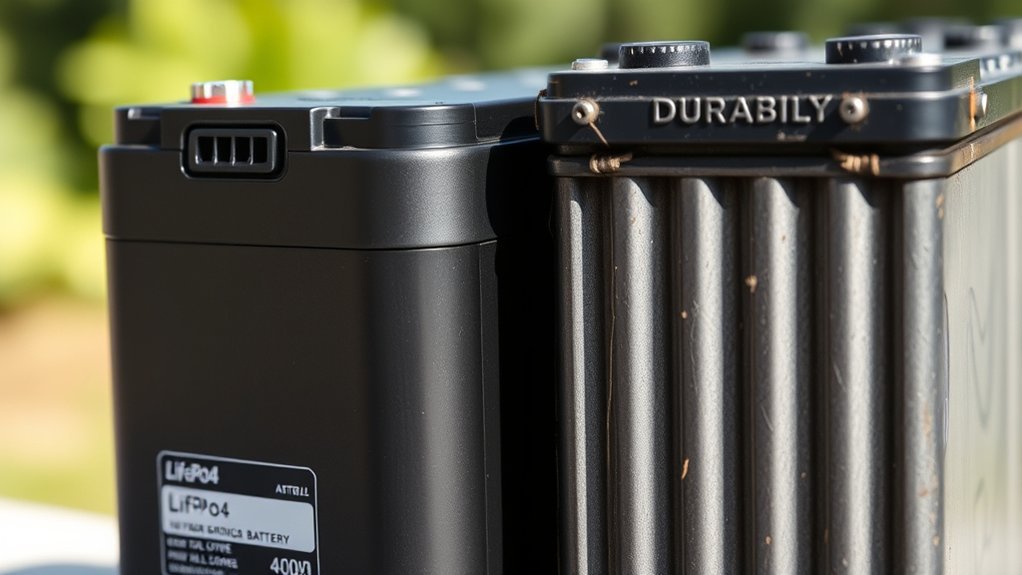
While Lifepo4 and AGM batteries are both popular choices for various applications, their lifespan and durability differ markedly due to their distinct chemical compositions and construction. Lifepo4 batteries typically last longer, offering 2,000–5,000 cycles, whereas AGM batteries average 500–1,000 cycles. Durability hinges on factors like temperature tolerance and charge cycles, impacting their overall lifespan. Lifepo4 batteries excel in environmental sustainability, being more amenable to battery recycling and reducing ecological impact. The table below compares key durability metrics:
| Feature | Lifepo4 Battery | AGM Battery |
|---|---|---|
| Typical Cycle Life | 2000-5000 | 500-1000 |
| Deep Discharge Tolerance | High | Moderate |
| Temperature Range | Wider | Narrower |
| Maintenance Requirements | Low | Moderate |
| Environmental Impact | Lower | Higher |
This analysis underscores Lifepo4’s superior longevity and eco-friendliness.
Weight and Size Differences: Which Is More Portable?
When evaluating portability, the weight-to-size ratio is a critical factor that influences practical application. Lifepo4 batteries typically offer a higher energy density, resulting in a lighter weight for a given capacity, whereas AGM batteries tend to be bulkier and heavier relative to their size. Analyzing these differences helps determine which battery type is more suitable for portable, space-constrained systems.
Overall Portability Factors
Evaluating portability factors requires examining both weight and size differences, as these elements directly influence ease of transport and handling. Lifepo4 batteries generally offer a more compact form factor, enhancing portability, while AGM batteries tend to be bulkier and heavier. Aesthetic design influences user perception, with sleek, modern styles favoring Lifepo4 units. Brand reputation also plays a role, as trusted brands often produce more durable, lightweight options.
| Battery Type | Weight | Size | Aesthetic & Reputation |
|---|---|---|---|
| Lifepo4 | Lighter | Smaller | Modern, trusted brand |
| AGM | Heavier | Larger | Conventional, established reputation |
This comparison highlights how Lifepo4 batteries excel in portability, supported by design and brand factors.
Weight-to-Size Ratio
Which battery offers a better weight-to-size ratio for portability? Lifepo4 batteries generally excel here due to their high energy density relative to size and weight, making them more compact and lighter than AGM batteries. This advantage enhances portability, especially in applications where space and weight are critical. Additionally, Lifepo4’s chemical stability contributes to a more durable, consistent performance over time, reducing the need for frequent replacements and minimizing waste during battery recycling. AGM batteries, while robust, tend to be heavier for their size due to lead plates, which impacts portability. Their larger size and weight make them less suitable for mobile applications. Overall, Lifepo4 batteries present a more efficient balance between weight, size, and long-term sustainability.
Cost Considerations: Which Battery Offers Better Value?
Although initial cost is a significant factor, understanding the long-term value of Lifepo4 and AGM batteries is essential for making an informed investment. Battery manufacturing processes influence production costs, with Lifepo4 cells typically requiring more complex technology, which initially raises expenses. However, market trends indicate that Lifepo4 batteries are decreasing in price as manufacturing efficiencies improve and supply chains expand. AGM batteries, benefiting from mature production lines, often have lower upfront costs but tend to have shorter lifespans and higher maintenance expenses over time. When evaluating value, it’s vital to take into account total cost of ownership, including replacement frequency and performance longevity. Ultimately, Lifepo4 batteries may offer better long-term value despite higher initial costs, driven by advancements in battery manufacturing and shifting market trends toward durable, high-efficiency energy storage solutions.
Performance in Different Conditions: Cold, Hot, and Heavy Use
When it comes to performance under various conditions, Lifepo4 and AGM batteries exhibit distinct characteristics that influence their suitability for different applications. Lifepo4 batteries maintain stable performance in cold temperatures, thanks to their chemical stability, whereas AGM batteries tend to experience reduced capacity in cold environments due to electrolyte viscosity. In hot conditions, Lifepo4 batteries resist thermal degradation better, partly because of manufacturing processes that optimize thermal management, while AGM batteries may suffer from accelerated electrolyte evaporation. Under heavy use, Lifepo4 batteries deliver consistent power and cycle life, aided by their design for deeper cycling and efficient battery recycling, which supports sustainability. Overall, these differences highlight how manufacturing processes and material properties shape each battery’s resilience in diverse environments.
Maintenance Needs and Safety Features of LiFePO4 and AGM Batteries
Both LiFePO4 and AGM batteries require regular maintenance to assure peak performance and safety, but their maintenance needs differ considerably due to their distinct chemistries. LiFePO4 batteries demand minimal upkeep, primarily monitoring voltage levels, preventing overcharging, and ensuring proper thermal management. AGM batteries, however, require periodic checking of electrolyte levels and terminal cleanliness to avoid corrosion. Safety features differ as well; LiFePO4 cells are inherently stable, reducing fire risk, and are easier to recycle safely, supporting manufacturing safety initiatives. Conversely, AGM batteries contain absorbed electrolytes that pose spill risks if damaged. Proper maintenance enhances safety, prolongs lifespan, and supports environmental responsibility through battery recycling efforts. Overall, understanding these maintenance nuances guarantees reliable operation and safer handling of both battery types.
Ideal Applications for Lithium Iron Phosphate and AGM Batteries
Understanding the ideal applications for LiFePO4 and AGM batteries requires analyzing their performance characteristics in specific use cases. We find that renewable energy storage, recreational vehicle power, and emergency backup systems each demand different battery attributes. By examining these contexts, we can identify which battery type offers the best balance of efficiency, safety, and longevity.
Renewable Energy Storage
Have you ever contemplated how lithium iron phosphate (LiFePO4) and AGM batteries distinctively suit renewable energy storage implementations? Their battery chemistry impacts performance, safety, and durability in this setting. LiFePO4 batteries, with their lower energy density, are perfect for fixed arrangements where space is less limited, providing high cycle life and thermal stability. AGM batteries, featuring higher energy density, are appropriate for smaller, portable systems requiring rapid energy deployment. Both types excel in specific situations:
- Extended cycle life for grid storage
- Safe operation under variable conditions
- Resistance to deep discharges
- Stable performance in fluctuating temperatures
- Cost-efficient solutions for large-scale applications
Grasping these subtleties helps optimize renewable energy integration, ensuring dependable and efficient power storage tailored to each application’s requirements.
Recreational Vehicle Power
When selecting batteries for recreational vehicles, the choice between lithium iron phosphate (LiFePO4) and AGM batteries depends on specific power requirements and operational conditions. LiFePO4 batteries excel in high cycle life and fast recharge capabilities, making them suitable for frequent use and extended trips. AGM batteries, with simpler installation and established reliability, are ideal for short-term trips and limited maintenance scenarios. Proper battery installation guarantees safety and efficiency, while readily available spare parts mitigate downtime.
| Aspect | LiFePO4 | AGM | Suitable Use Cases |
|---|---|---|---|
| Power Durability | Longer cycle life | Reliable but shorter lifespan | Extended camping trips |
| Maintenance | Minimal, no venting required | Regular checks needed | Shorter trips |
| Installation | Requires careful setup | Easier to install | Limited space, quick deployment |
Emergency Backup Systems
In emergency backup systems, selecting the appropriate battery type is essential for guaranteeing reliability and safety during power outages. Lithium Iron Phosphate (LiFePO4) batteries excel due to their stable battery chemistry and high number of charge cycles, often exceeding 2000, which assures longevity. AGM batteries, while robust, typically have fewer charge cycles (around 500-700), but offer quick response times and maintenance-free operation. For critical applications, LiFePO4’s consistent voltage delivery and deeper cycling capacity make it ideal. AGM batteries are suitable for shorter-term backup needs where rapid deployment is prioritized.
- Longer lifespan with more charge cycles (LiFePO4)
- Superior thermal stability and safety
- Fast recharge capabilities
- Lower self-discharge rate (LiFePO4)
- Cost considerations and maintenance needs
Environmental Impact and Recycling Options
Although both LiFePO4 and AGM batteries are widely used for energy storage, their environmental impacts and recycling options differ markedly. LiFePO4 batteries generally have a lower environmental footprint during manufacturing due to less toxic material use and more sustainable resource extraction, aligning with current Market trends favoring eco-friendly solutions. In contrast, AGM batteries contain lead and other hazardous substances, complicating recycling processes and increasing disposal risks. Recycling options for LiFePO4 involve recovery of lithium and phosphate, which are more straightforward and environmentally sound. As battery manufacturing advances, the push toward sustainable practices is shaping Market trends, promoting recyclable designs and safer materials. Overall, LiFePO4 batteries offer a more environmentally responsible lifecycle, whereas AGM batteries pose greater challenges in waste management and recycling.
Choosing the Right Battery: Which One Suits Your Power Needs?
Selecting the appropriate battery depends on accurately evaluating your specific power requirements and operational conditions. We consider factors like battery longevity, environmental sustainability, and performance under load. Lifepo4 batteries generally offer longer lifespan and superior cycle stability, making them ideal for sustained use. AGM batteries, however, provide reliable performance at a lower upfront cost and are suitable for short-term or less-demanding applications. To determine the best fit, consider:
Choose batteries based on your power needs, considering lifespan, cost, and environmental impact for optimal performance.
- Total energy capacity needed
- Frequency of charge/discharge cycles
- Weight and size constraints
- Environmental impact and recycling options
- Long-term cost efficiency
Frequently Asked Questions
Are Lifepo4 Batteries Safer Than AGM Batteries?
We believe LiFePO4 batteries are safer than AGM batteries due to their stable chemistry, offering longer battery longevity and lower environmental impact, reducing risks of thermal runaway and leaks, making them a more reliable, eco-friendly choice for many applications.
Can Lifepo4 Batteries Be Used in Deep Cycle Applications?
Absolutely, Lifepo4 batteries excel in deep cycle applications, delivering durability and consistent discharge. Their longevity outperforms alternatives, and their environmentally friendly design reduces impact, making them a technically superior and sustainable solution for demanding energy demands.
How Do Charging Times Compare Between Lifepo4 and AGM Batteries?
We find Lifepo4 batteries charge faster than AGM counterparts, thanks to their higher charge acceptance, which enhances overall battery lifespan and offers a favorable cost comparison over time, despite higher initial investment.
Do Lifepo4 Batteries Require Special Charging Equipment?
We’ve found that Lifepo4 batteries do require specialized charging equipment, much like a high-performance engine needs precision tuning. This guarantees ideal charging efficiency and prolongs battery lifespan, preventing damage from improper charging methods.
What Warranties Are Typically Offered for Each Battery Type?
We find warranties usually cover 5-10 years for Lifepo4 batteries, reflecting their longer lifespan, while AGM batteries often come with 3-5 year warranties. The cost comparison influences warranty durations, with Lifepo4’s higher upfront cost offering extended coverage.
Conclusion
In analyzing LiFePO4 and AGM batteries, we see that LiFePO4’s longevity, stability, and environmental benefits often justify its higher initial cost for demanding applications. Conversely, AGM batteries excel in affordability and ease of use for short-term or less intensive needs. Ultimately, selecting the ideal battery depends on balancing performance requirements, budget constraints, and sustainability goals. A careful assessment of these factors ensures an informed choice aligned with specific energy storage demands.