When comparing LiFePO4 batteries to traditional lithium-ion types, safety considerations are a primary concern. Their chemical stability and thermal properties suggest potential advantages, but understanding the specific risks and benefits requires a detailed analysis. We need to examine how each technology responds under normal and extreme conditions, especially regarding safety features and failure modes. Exploring these differences can clarify whether LiFePO4 truly offers a safer alternative and what implications that has for various applications.
Key Takeaways
- LiFePO4 batteries have inherently higher thermal stability, reducing the risk of thermal runaway and fires compared to lithium-ion batteries.
- The stable chemistry of LiFePO4 minimizes hazardous reactions during overcharging or damage.
- LiFePO4’s strong phosphate bonds make it less prone to overheating and catastrophic failure.
- Lithium-ion batteries with cobalt or nickel cathodes are more susceptible to overheating and safety issues.
- Overall, LiFePO4 batteries offer safer operation, especially in high-risk or critical applications.
What Are LiFePO4 and Lithium-Ion Batteries? Understanding the Basics
While both LiFePO4 (lithium iron phosphate) and traditional lithium-ion batteries are popular energy storage solutions, they differ markedly in chemistry and performance characteristics. LiFePO4 batteries utilize a phosphate-based cathode, offering enhanced thermal stability and safety, reducing risks like thermal runaway. Lithium-ion batteries, commonly using cobalt or nickel cathodes, deliver higher energy density but pose greater safety concerns. From an environmental standpoint, LiFePO4 batteries are more environmentally friendly due to their less toxic materials and easier battery recycling processes. Their stability also minimizes the environmental impact during disposal. Conversely, lithium-ion batteries require careful handling and recycling to prevent hazardous waste. Understanding these basic chemistry differences informs us about safety, efficiency, and environmental implications, essential factors in battery selection and sustainable energy solutions.
How Do the Chemistries of LiFePO4 and Lithium-Ion Batteries Differ?
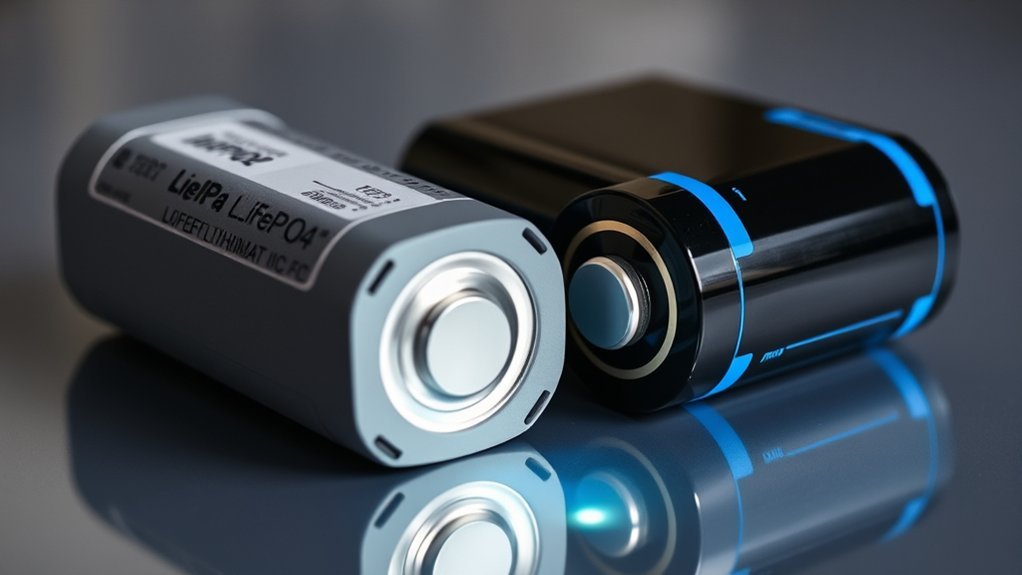
The chemical compositions of LiFePO4 and typical lithium-ion batteries differ considerably, influencing their electrochemical behavior. LiFePO4 uses an iron phosphate cathode, offering enhanced thermal stability, whereas other lithium-ion chemistries often incorporate cobalt or nickel-based cathodes. These compositional differences directly impact their thermal stability and safety profiles, making them critical factors in safety assessments.
Chemical Composition Differences
Understanding the fundamental chemical differences between LiFePO4 and traditional lithium-ion batteries is essential for evaluating their safety profiles. LiFePO4’s cathode comprises lithium iron phosphate, which provides a stable crystal structure, reducing risks of thermal runaway. In contrast, lithium-ion batteries typically use layered transition metal oxides, which are more reactive. These compositional differences influence environmental impact; LiFePO4 batteries contain non-toxic, abundant materials, making recycling procedures safer and more straightforward. Conversely, lithium-ion batteries often include cobalt and nickel, raising concerns about environmental contamination and complex recycling processes. The inherent stability of LiFePO4’s chemistry minimizes hazardous waste during disposal, further enhancing safety and environmental sustainability. Overall, chemical composition profoundly impacts both safety and environmental considerations for these battery types.
Thermal Stability Variations
The chemistries of LiFePO4 and traditional lithium-ion batteries directly influence their thermal stability, with significant implications for safety. LiFePO4’s stable crystal structure resists thermal runaway, reducing the risk of fires and explosions. Conversely, lithium-ion batteries with cobalt-based cathodes are more prone to overheating due to their less stable chemistry. This thermal behavior impacts battery recycling processes; LiFePO4 batteries generate fewer hazardous byproducts, lessening environmental impact. Additionally, their enhanced thermal stability prolongs lifespan, decreasing the frequency of disposal and associated environmental concerns. Understanding these chemistry-driven stability differences is essential for safety considerations and sustainable practices, highlighting LiFePO4’s advantages in both operational safety and environmental impact reduction through safer battery recycling.
Which Battery Type Is Safer During Normal Use? Analyzing Stability and Risks
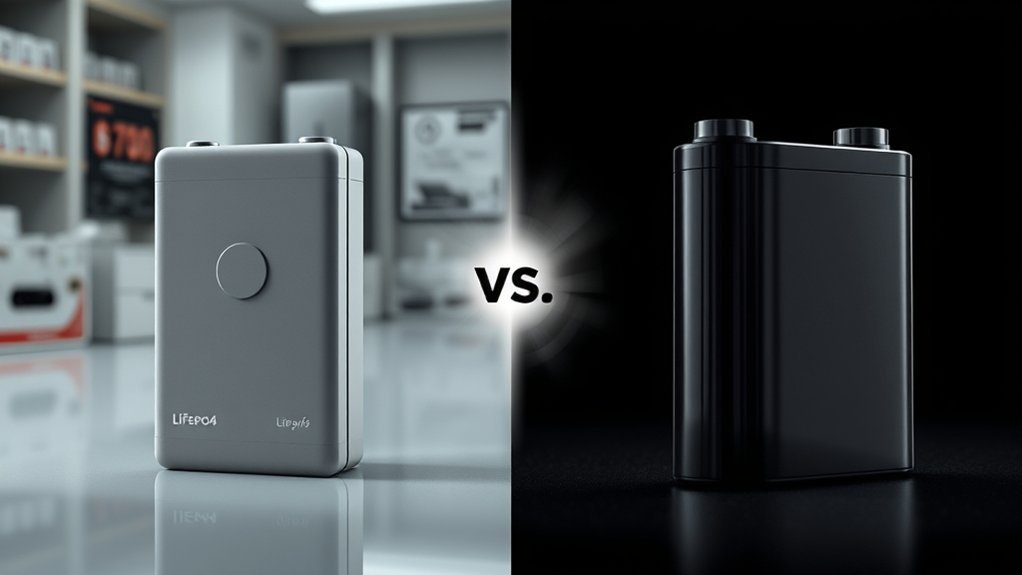
Although both LiFePO4 and lithium-ion batteries are widely used in various applications, LiFePO4 batteries generally exhibit greater stability during normal operation. This stability stems from their chemical structure, which inherently reduces risks like thermal runaway. LiFePO4 batteries also adhere to strict manufacturing standards, ensuring consistent quality and safety. Their robust chemistry minimizes the chance of dangerous failures and simplifies battery recycling processes, reducing environmental hazards. In contrast, lithium-ion batteries, while efficient, are more susceptible to voltage fluctuations and internal degradation, increasing risks over time.
| Feature | LiFePO4 | Lithium-Ion |
|---|---|---|
| Stability During Use | Higher | Lower |
| Recycling & Safety | Easier, safer, standards-based | More complex, riskier |
| Manufacturing | Strict, quality-focused | Varies, less standardized |
How Do LiFePO4 Batteries Handle Thermal Runaway Compared to Lithium-Ion?
LiFePO4 batteries handle thermal runaway much more effectively than lithium-ion batteries due to their inherent chemical stability. Their stable cathode chemistry prevents rapid temperature escalation and violent reactions during thermal events, minimizing safety hazards. This stability reduces the risk of fire and explosion, making thermal runaway less likely. Additionally, LiFePO4’s longer cycle life and lower degradation contribute to safer operation over time. When considering battery recycling, LiFePO4’s stable chemistry simplifies disassembly and reduces hazardous waste, positively impacting environmental impact. Unlike lithium-ion batteries, which can release toxic electrolytes during failure, LiFePO4’s safer chemical profile contributes to more environmentally friendly disposal and recycling processes. Overall, these characteristics make LiFePO4 batteries a safer choice in managing thermal runaway risks and environmental concerns.
Are LiFePO4 Batteries Less Prone to Fires and Explosions?
LiFePO4 batteries exhibit superior chemical stability, reducing the likelihood of thermal instability that can lead to fires or explosions. Their inherent resistance to thermal runaway markedly lowers the risk compared to traditional lithium-ion chemistries. Consequently, this stability makes LiFePO4 a safer choice in applications where safety is paramount.
Chemical Stability Benefits
The inherent chemical structure of LiFePO4 contributes markedly to its stability, making it less prone to thermal runaway and catastrophic failure. This stability stems from its strong phosphate bonds and stable electrode material, which resist decomposition under stress. Consequently, LiFePO4 batteries exhibit reduced risk of fires and explosions, enhancing safety profiles. Their chemical stability also simplifies battery recycling, as fewer hazardous byproducts are generated during disposal, minimizing environmental impact. The robust chemistry reduces the need for complex safety measures, lowering overall lifecycle risks. This stability not only supports safer operation but also promotes sustainable practices by enabling cleaner recycling processes, further reducing ecological footprints. Overall, LiFePO4’s intrinsic chemical properties make it a safer, more environmentally conscious choice in battery technology.
Reduced Thermal Runaway
While lithium-ion batteries are generally considered safe, LiFePO4 variants demonstrate a remarkably lower propensity for thermal runaway, thereby reducing the risk of fires and explosions. This inherent stability stems from their chemical composition, which resists the rapid temperature increases that trigger thermal runaway in other lithium-ion chemistries. Consequently, LiFePO4 batteries are less likely to reach critical thermal thresholds, enhancing safety in various applications. Their reduced risk profile also positively impacts battery recycling, as safer batteries are less prone to catastrophic failures during disposal or repurposing. From an environmental perspective, this stability minimizes the potential release of hazardous materials, lowering environmental impact. Overall, LiFePO4’s reduced thermal runaway risk makes them a safer, more sustainable choice in energy storage solutions.
What Practical Applications Benefit Most From the Safety of Lifepo4?
Because safety is paramount in high-risk environments, applications that demand reliable, non-volatile energy storage stand to benefit most from the inherent stability of LiFePO4 batteries. These batteries excel in sectors like renewable energy, electric vehicles, and grid storage, where safety concerns are critical. Their thermal stability reduces risks during operation, enhancing overall system safety and longevity. Additionally, the stable chemistry facilitates more sustainable battery recycling processes, minimizing environmental impact. As market adoption of LiFePO4 grows, industries increasingly prioritize safety alongside performance, driving broader integration. This focus on safety performance, combined with recyclability, makes LiFePO4 well-suited for applications where reliability and environmental considerations are essential, such as in large-scale energy storage and transportation infrastructure.
Do LiFePO4 Batteries Require Different Charging and Maintenance?
LiFePO4 batteries generally require different charging protocols compared to traditional lithium-ion chemistries, primarily due to their stable chemistry and voltage characteristics. They demand a charger with a specific voltage cutoff to prevent overcharging, which can compromise safety and lifespan. Proper maintenance extends battery recycling potential and minimizes environmental impact.
Key considerations include:
- Using chargers designed specifically for LiFePO4 chemistry to guarantee peak performance.
- Avoiding over-discharge, which can damage the cell structure and hinder recycling efforts.
- Regularly monitoring temperature to prevent thermal runaway and prolong lifespan.
- Implementing balanced charging to maintain cell health, supporting sustainable disposal and environmental safety.
Adherence to these protocols ensures safety, durability, and responsible environmental management.
What Are the Cost and Longevity Implications for Safer Battery Choices?
Choosing safer battery options like LiFePO4 can have significant implications for both upfront costs and long-term value. Although LiFePO4 batteries often have a higher initial price, their extended lifespan—typically 2,000 to 5,000 cycles—reduces replacement frequency, ultimately lowering lifecycle costs. From a sustainability perspective, these batteries facilitate easier battery recycling, decreasing environmental impact by minimizing hazardous waste. Their inherent thermal stability reduces safety-related concerns that could lead to costly failures or safety incidents, further enhancing long-term savings. Additionally, safer batteries tend to align with stricter environmental regulations, promoting responsible disposal and recycling practices. Overall, investing in LiFePO4 batteries offers a balanced approach combining safety, durability, and environmental considerations, which collectively influence long-term economic and ecological benefits.
How Do Safety Features of LiFePO4 Batteries Compare to Traditional Lithium-Ion?
While traditional lithium-ion batteries have become pervasive in various applications, LiFePO4 batteries offer notable safety advantages rooted in their chemical and structural properties. Their thermal stability reduces the risk of thermal runaway, making them inherently safer. Key safety features include:
LiFePO4 batteries provide safer energy storage with enhanced thermal stability and reduced fire risk.
- Stable Chemistry: LiFePO4’s robust chemical structure resists overheating and combustion.
- Lower Risk of Fire: Reduced propensity for thermal runaway minimizes fire hazards.
- Battery Recycling: Safer for recycling, with fewer toxic materials, lessening environmental impact.
- Environmental Impact: Safer disposal reduces harmful emissions compared to traditional lithium-ion batteries, supporting sustainable waste management practices.
These attributes highlight LiFePO4’s superior safety profile, emphasizing their role in safer energy storage and more environmentally responsible battery recycling.
Which Battery Is the Better Choice for Your Safety and Energy Needs?
When evaluating batteries for safety and energy needs, it’s essential to consider their specific characteristics that influence performance and risk. Lifepo4 batteries excel in thermal stability and have a lower risk of fire, making them safer for sensitive applications. Lithium-ion batteries, while offering higher energy density, pose increased safety concerns, especially under stress. Additionally, Lifepo4 batteries are more environmentally friendly due to easier battery recycling and reduced toxic waste. To compare these factors:
| Aspect | Lifepo4 | Lithium-Ion |
|---|---|---|
| Safety | Higher thermal stability | Increased fire risk |
| Environmental Impact | Easier battery recycling | More toxic waste |
| Energy Density | Lower than lithium-ion | Higher energy density |
Choosing between them depends on prioritizing safety, environmental impact, or energy density.
Frequently Asked Questions
Can Lifepo4 Batteries Withstand Extreme Environmental Conditions Better Than Lithium-Ion?
We believe Lifepo4 batteries excel in extreme environments due to their superior thermal stability and mechanical resilience, allowing them to withstand high temperatures, physical shocks, and harsh conditions better than lithium-ion batteries, ensuring safer, more reliable performance.
Are There Specific Industries Where Lifepo4 Batteries Are Mandated for Safety Reasons?
We find that industries like aerospace and medical sectors mandate LiFePO4 batteries due to their superior safety, driven by enhanced manufacturing standards and battery durability, which mitigate risks associated with thermal runaway and chemical instability inherent in traditional lithium-ion batteries.
How Do Recycling and Disposal Safety Compare Between Lifepo4 and Lithium-Ion Batteries?
While LiFePO4 batteries offer safer recycling and disposal with lower environmental impact and manufacturing risks, lithium-ion batteries pose higher hazards due to toxic materials, necessitating stricter handling protocols for environmental and safety concerns.
Do Lifepo4 Batteries Emit Fewer Hazardous Gases During Failure?
We find that LiFePO4 batteries emit fewer hazardous gases during failure due to their superior chemical stability, substantially lowering fire risk. This enhanced stability makes them a safer option, especially in high-stress or failure scenarios.
Are Lifepo4 Batteries Less Likely to Degrade Over Time in Safety-Critical Applications?
We believe LiFePO4 batteries exhibit greater longevity and maintain safety certifications longer in safety-critical applications, thanks to their stable chemistry, lower degradation rates, and robust design, making them a more reliable choice over time.
Conclusion
In our analysis, LiFePO4 batteries emerge as a more stable, resilient choice—like a fortress built on solid ground, resisting the turbulent flames that threaten traditional lithium-ion batteries. Their chemical structure acts as a barrier against thermal runaway, reducing fire risks and ensuring safety even under stress. While they may come with higher upfront costs, their longevity and inherent stability make them a prudent investment for safer energy storage, offering peace of mind in an unpredictable world.