It’s interesting how, during research, we often find that proper storage practices can considerably extend LiFePO4 battery lifespan, yet many overlook the importance of detailed protocols. Ensuring these batteries are stored in a cool, dry environment with stable temperatures and a proper state of charge is critical. Understanding the nuances of ideal storage conditions can prevent capacity loss and safety issues, prompting us to explore the best methods to preserve their performance over time.
Key Takeaways
- Store LiFePO4 batteries in a cool (0-25°C), dry, well-ventilated environment to prevent degradation.
- Keep the battery’s state of charge around 50-60% to maximize lifespan and safety.
- Use sealed, non-conductive containers that allow inspection and protect from moisture and environmental hazards.
- Avoid deep discharges or full charges during storage; periodically check and top up to maintain optimal SOC.
- Regularly inspect batteries for signs of capacity loss, swelling, or imbalance, and handle with proper safety precautions.
How to Prepare Your LiFePO4 Battery for Storage
Before storing your LiFePO4 battery, it’s essential to fully charge it to approximately 50-70% capacity, as this range minimizes capacity loss and battery degradation over time. Maintaining this charge level reduces stress on the battery’s chemistry, prolonging its lifespan during storage. It’s also critical to factor in the number of charging cycles—excessive cycles can accelerate capacity fade. To promote sustainability, plan for proper battery recycling at the end of its lifecycle, preventing environmental harm. Prior to storage, avoid deep discharges, which can harm the battery’s health, and guarantee it’s charged within the ideal range. Proper preparation minimizes capacity loss and degradation, assuring the battery performs well when reactivated. This careful approach enhances longevity and supports responsible battery management.
Ideal Storage Conditions for LiFePO4 Batteries
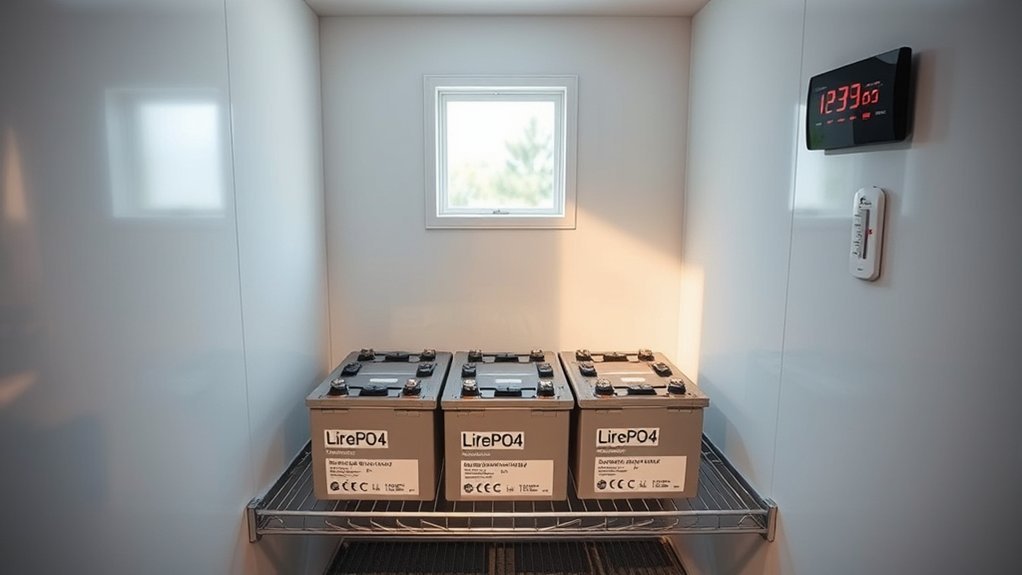
Maintaining ideal storage conditions for LiFePO4 batteries is key to preserving their capacity and extending lifespan. Optimal conditions involve storing batteries in a cool, dry environment, ideally between 0°C and 25°C, to minimize capacity loss caused by temperature fluctuations. Avoid high humidity and direct sunlight, which can accelerate degradation. Proper ventilation is essential to prevent heat buildup during storage, ensuring safety and preventing thermal runaway. Charging safety remains critical; batteries should be stored at a safe state of charge, typically around 50%, to reduce stress and prolong life. Additionally, responsible battery recycling practices should be adhered to when batteries reach end-of-life, preventing environmental harm. Consistent monitoring and adherence to these conditions are crucial for maximizing performance and safety during storage.
What State of Charge Should Your LiFePO4 Be When Stored?
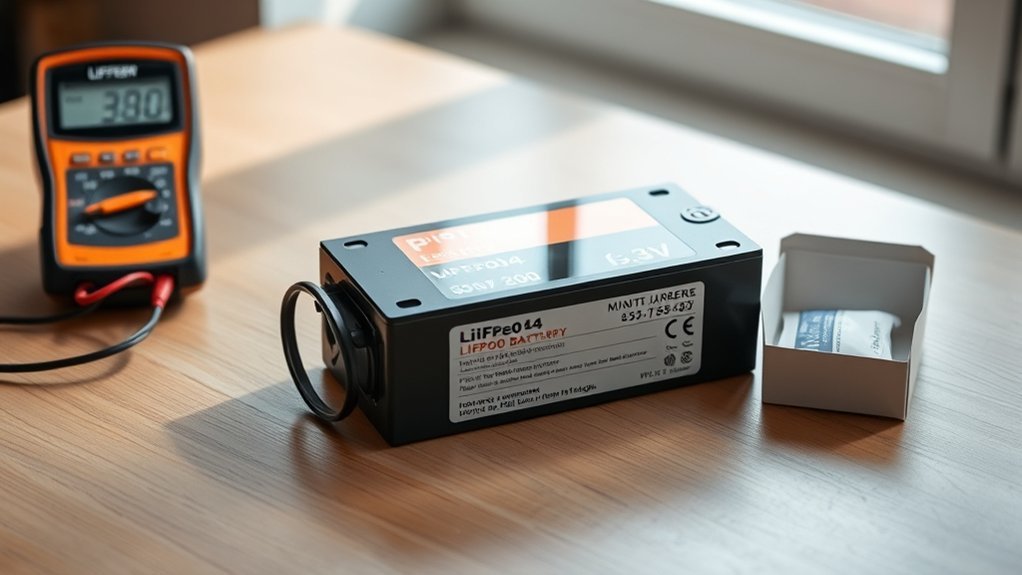
Maintaining the correct state of charge during storage is critical for battery longevity, with a ideal level around 50-60%. Overdischarge can cause irreversible damage, so avoiding letting the voltage drop too low is crucial. Ensuring proper charge levels minimizes risks and preserves battery health over extended periods.
Optimal Storage Charge Level
To guarantee ideal longevity and performance, LiFePO4 batteries should be stored at a specific state of charge (SOC) rather than fully charged or fully discharged. Maintaining the best SOC minimizes capacity loss and battery degradation over time. The recommended storage SOC is approximately 50-60%, balancing battery chemistry stability and reducing stress on internal components. Proper battery maintenance involves monitoring this level periodically and employing correct charging techniques before storage. Use the following table to understand best storage parameters:
| Storage SOC (%) | Duration of Storage | Recommended Charging Technique |
|---|---|---|
| 50-60% | Up to 6 months | Partial charge, then disconnect |
| 60-70% | Up to 3 months | Maintain charge through periodic top-ups |
| 30-50% | Short-term storage | Avoid deep discharge, periodic checks |
| 70-80% | Not recommended | Risk of overvoltage damage |
| 20-30% | Not recommended | Increased capacity loss risk |
Risks of Overdischarge
Storing LiFePO4 batteries at an excessively low state of charge exposes them to significant risks of overdischarge, which can cause irreversible damage to their internal chemistry. Overdischarge depletes the cell’s voltage below safe thresholds, risking capacity loss and potential thermal instability. This damage hampers battery lifespan and can complicate recycling processes, conflicting with manufacturing standards that emphasize durability and safety. To mitigate these risks, we recommend storing LiFePO4 cells at a partial charge—typically around 50-60%—to preserve their chemistry and facilitate proper battery recycling at end-of-life. Adhering to these guidelines guarantees maximum longevity, aligns with industry manufacturing standards, and supports sustainable disposal practices, preventing the detrimental effects of overdischarge on both the battery and the environment.
Best Practices for Long-Term Storage of LiFePO4 Batteries
For long-term storage of LiFePO4 batteries, maintaining an ideal charge level—around 50%—is essential to prevent capacity loss. Storing batteries in a cool, stable environment minimizes degradation, while using proper sealed containers prevents moisture and contamination. Adhering to these practices guarantees battery longevity and reliable performance over extended periods.
Maintain Optimal Charge Level
Maintaining the ideal charge level is essential for preserving LiFePO4 battery health during long-term storage. We recommend storing the battery at approximately 50-60% state of charge, as this range minimizes capacity loss and reduces stress on internal components. Consistently monitoring charge levels prevents over-discharge or overcharge, which can diminish battery lifespan. Limiting the number of charging cycles during storage helps maintain prudent battery capacity over time.
| Charge Level | Impact on Battery Health |
|---|---|
| 100% | Accelerates capacity fade |
| 50-60% | Preserves capacity, longevity |
| Below 20% | Risks irreversible damage |
| Above 80% | Increases internal stress |
Store in Cool Environment
Why is temperature control critical when storing LiFePO4 batteries long-term? Elevated temperatures accelerate chemical degradation, reducing capacity and lifespan. Conversely, low temperatures can cause voltage fluctuations and impair battery performance. Storing batteries in a cool environment minimizes thermal stress, preserving cell integrity. Proper battery insulation helps maintain a stable temperature, preventing heat transfer that could lead to overheating or excessive cooling. Maintaining consistent temperature also supports voltage regulation, preventing voltage drift that can compromise safety and efficiency. A controlled, cool environment guarantees the battery remains within ideal voltage ranges, reducing the risk of capacity loss and internal damage. Overall, temperature management through cooling and insulation is vital for maximizing long-term storage stability and ensuring reliable performance when the batteries are needed.
Use Proper Storage Containers
Choosing the right storage containers for LiFePO4 batteries is crucial to protect them from environmental factors that can compromise their longevity. Proper containers should be non-conductive, flame-retardant, and resistant to temperature fluctuations. This prevents accidental shorts and reduces degradation caused by moisture or contaminants. When storing batteries long-term, it’s important to follow appropriate charging techniques—keeping them at a partial state of charge, around 50%, minimizes capacity loss. Additionally, using containers that facilitate battery recycling awareness encourages environmentally responsible disposal at end-of-life. The container’s design should allow for safe ventilation and easy inspection, reducing risks of overheating or corrosion. Proper storage containers, combined with correct charging practices, ensure peak battery health and sustainable lifecycle management.
How to Maintain Battery Health During Storage
To preserve the longevity and performance of LiFePO4 batteries during storage, it’s essential to control their state of charge, temperature, and environment carefully. Maintaining a storage charge of approximately 50-60% maximizes cell chemistry and reduces capacity loss. Temperature should be kept between 0°C and 25°C to prevent degradation; extreme heat accelerates aging, while cold temperatures can temporarily reduce performance. Regularly monitoring battery health enables early detection of capacity fade or imbalances, facilitating emergency charging if needed to restore ideal charge levels without overcharging. Proper disposal through battery recycling programs ensures environmental safety at the end of the battery’s life, preventing hazardous waste. These practices collectively sustain battery health, minimize capacity loss, and support responsible handling during extended storage periods.
Common Mistakes to Avoid When Storing LiFePO4 Batteries
One common mistake to avoid when storing LiFePO4 batteries is leaving them at an improper state of charge for extended periods, typically either fully charged or fully depleted. Maintaining a storage charge level between 30-50% prevents capacity loss and battery degradation. Overcharged batteries increase risk of thermal runaway, while discharged ones may suffer sulfation. Additionally, neglecting proper storage can hinder emergency preparedness, as degraded batteries may fail when urgently needed. Improper storage practices can also complicate battery recycling efforts, causing environmental hazards. Always store batteries in a cool, dry environment and periodically check their state of charge. Avoid prolonged storage at full charge to extend lifespan and ensure readiness for critical situations. Proper storage safeguards both battery health and environmental safety.
How to Safely Disconnect and Store Your Batteries
Before disconnecting your LiFePO4 batteries, make sure they are fully powered down to prevent electrical hazards or damage. Use insulated tools to carefully disconnect the terminals, starting with the negative terminal to minimize sparks. Conduct an emergency disconnection if you notice any abnormal behavior or damage, ensuring safety takes priority. Once disconnected, store the batteries in a cool, dry, well-ventilated area away from combustible materials. For long-term storage, maintain a partial charge — typically around 50-70% — to preserve battery health. When the batteries reach end-of-life, adhere to proper battery recycling protocols to prevent environmental harm. Proper disconnection and storage procedures are essential for safety, longevity, and environmental responsibility.
Troubleshooting Storage Issues and Ensuring Battery Longevity
Ensuring the longevity of LiFePO4 batteries during storage requires proactive troubleshooting of common issues that can compromise performance or safety. Regularly inspect for capacity loss, voltage imbalance, or signs of swelling, which indicate internal degradation. Proper storage container materials—such as non-conductive, flame-retardant plastics—prevent accidental shorts and thermal hazards. Maintaining a stable temperature and a partial state of charge (around 50%) minimizes capacity fade. When batteries reach end-of-life, prioritize battery recycling to prevent environmental contamination and recover valuable materials. Consistent monitoring and troubleshooting help identify early warning signs, facilitating timely action. Proper storage practices combined with awareness of battery recycling protocols ensure safety, optimize lifespan, and contribute to sustainable battery management.
Frequently Asked Questions
How Long Can a Lifepo4 Battery Be Stored Without Charging?
We recommend storing LiFePO4 batteries for up to a year without charging if battery insulation is maintained and the storage location remains cool and dry. Regularly check voltage levels to prevent over-discharge during extended storage periods.
Does Temperature Fluctuation Affect Lifepo4 Battery Storage?
Did you know temperature fluctuations can reduce LiFePO4 battery lifespan by up to 50%? Temperature stability in your storage environment is essential; maintaining consistent conditions prevents capacity loss and guarantees peak performance over time.
Should I Periodically Check Stored Lifepo4 Batteries?
Yes, you should periodically check stored LiFePO4 batteries for ideal battery maintenance. Monitoring voltage and condition helps prevent capacity loss, ensuring the storage environment remains stable, temperature-controlled, and free from corrosion or damage that could compromise performance.
Can Stored Lifepo4 Batteries Be Recharged Multiple Times?
Like a well-oiled machine, our stored LiFePO4 batteries can be recharged multiple times with proper battery maintenance and storage safety. Regular checks guarantee longevity, preventing capacity loss and ensuring reliable performance over repeated charge cycles.
What Are Signs of Battery Deterioration During Storage?
We observe battery deterioration through signs like corrosion on terminals and voltage imbalance, indicating internal degradation. Regularly check for corrosion and uneven voltage levels to guarantee ideal lifespan and prevent potential failure during storage.
Conclusion
By following these storage guidelines, we can greatly extend the lifespan of our LiFePO4 batteries. Proper preparation, ideal conditions, and regular maintenance are vital, but even small mistakes can jeopardize their performance. Are you prepared to implement these best practices and realize your battery’s full potential? Staying vigilant and attentive during storage isn’t just recommended—it’s essential. The key to longevity might be closer than you think, but only if you act now.