Managing the complexities of LiFePO4 battery maintenance can be seen as a careful balancing act, essential for ensuring peak performance and longevity. Proper management involves precise voltage control, disciplined storage, and routine inspections—each playing a critical role in preventing premature failure. As we explore these best practices, you’ll discover strategies that not only extend your battery’s lifespan but also safeguard your investment. The key to mastering this process lies in understanding the subtle nuances that distinguish good maintenance from the rest.
Key Takeaways
- Maintain voltage between 3.6 to 3.65V per cell during charging to extend battery life.
- Store batteries at 50-60% charge in a cool, dry environment for optimal preservation.
- Regularly inspect for physical damage, voltage imbalances, and capacity decline to identify early issues.
- Use chargers with voltage regulation, balancing features, and appropriate current limits.
- Follow safety protocols, including protective gear, responsible disposal, and recycling to ensure environmental sustainability.
How to Properly Charge Your LiFePO4 Batteries for Longevity
To maximize the lifespan of LiFePO4 batteries, it is essential to follow proper charging protocols that prevent overvoltage and excessive charging cycles. The unique battery chemistry of LiFePO4 allows for a stable voltage profile, but overcharging can still accelerate capacity degradation. Maintaining the voltage within the recommended range—typically around 3.6 to 3.65 volts per cell—reduces stress on the chemistry and extends cycle life. Limiting charging cycles by avoiding deep discharges and adhering to manufacturer-specified charging rates minimizes wear on the battery. Proper charger selection, equipped with voltage regulation and balancing features, ensures consistent charge levels and preserves cell health. Ultimately, disciplined charging practices aligned with the battery’s chemistry optimize longevity and overall performance.
Best Storage Practices to Preserve Your LiFePO4 Battery Life
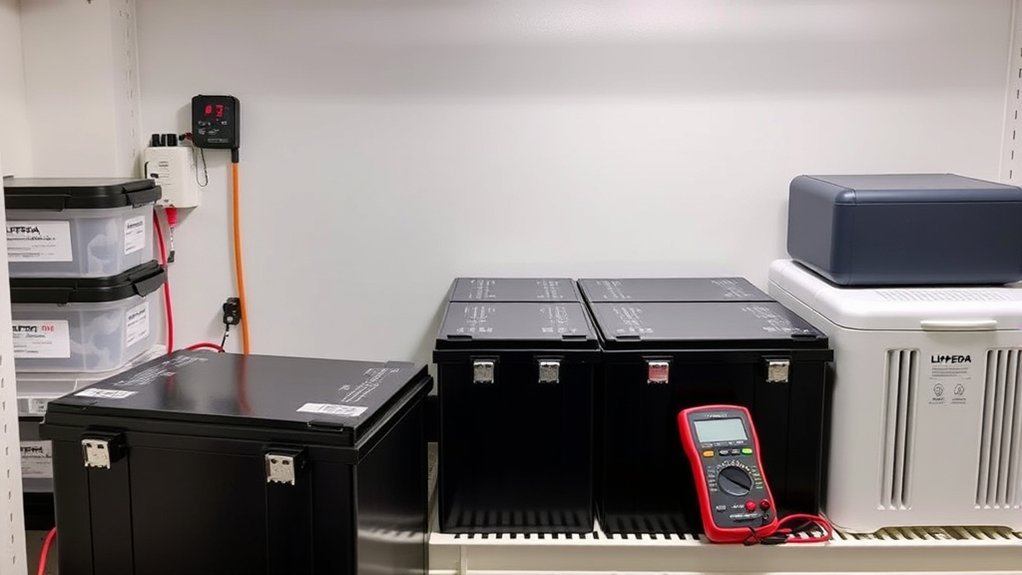
Proper storage of LiFePO4 batteries is vital for maintaining their capacity and prolonging lifespan, especially during periods of inactivity. Ideal storage involves maintaining a state of partial charge, typically around 50-60%, to prevent capacity loss caused by over-discharge or overcharge. Temperature control is essential; storing batteries in a cool, dry environment reduces degradation. Regularly inspecting stored batteries guarantees early detection of capacity decline. Additionally, responsible battery recycling is fundamental to mitigate environmental impact, especially when batteries reach end-of-life. Proper disposal prevents harmful chemicals from contaminating ecosystems and promotes sustainable resource recovery. By adhering to these storage practices, users can maximize battery longevity while reducing environmental harm, aligning with best practices for eco-conscious battery management.
Recognizing Signs of Battery Degradation and When to Replace

Understanding the signs of battery degradation is essential for maintaining peak performance and ensuring safety. As LiFePO4 batteries age, indicators such as reduced capacity, increased internal resistance, and voltage inconsistencies emerge. Recognizing these signs early allows timely replacement, minimizing operational risks and environmental impact. When a battery’s performance declines profoundly, it often becomes uneconomical to repair, making recycling necessary. Proper disposal through battery recycling prevents hazardous materials from harming the environment. The table below highlights key degradation signs, their implications, and recommended actions:
| Sign | Implication | Action |
|---|---|---|
| Capacity reduction | Decreased runtime or efficiency | Replace or recycle |
| Voltage drops | Inconsistent power delivery | Monitor closely, replace if persistent |
| Increased resistance | Reduced charge acceptance | Consider replacement |
| Swelling or leaks | Safety hazard, potential failure | Immediate disposal, recycle |
Essential Safety Precautions When Handling LiFePO4 Batteries
Handling LiFePO4 batteries safely is vital to prevent accidents and guarantee peak performance. Proper procedures minimize risks such as thermal runaway, electrical hazards, and chemical exposure. We recommend always wearing protective gear and working in well-ventilated areas. Disposing of damaged batteries responsibly is essential, as improper disposal can harm the environment and increase the environmental impact. Battery recycling plays an essential role in reducing waste and recovering valuable materials, aligning with sustainable practices. Avoid short circuits and overcharging, which can compromise safety and degrade battery life. Regular inspection helps identify potential issues early, ensuring safe operation. Adhering to these precautions not only safeguards personnel but also supports environmentally conscious battery management, emphasizing the importance of responsible handling throughout the battery lifecycle.
Maintaining Optimal Voltage and Current Levels During Use
To guarantee ideal performance, we emphasize the importance of regularly monitoring voltage levels to prevent over-discharge or overcharge conditions. We also need to avoid overcurrent situations that can damage the battery or reduce its lifespan. By maintaining precise control over these parameters, we maximize both safety and efficiency during operation.
Monitor Voltage Levels Regularly
Regularly monitoring the voltage levels of your LiFePO4 battery is essential to guarantee safe and efficient operation. Small voltage fluctuations can indicate underlying issues such as cell imbalances, which may compromise performance and lifespan. By tracking voltage consistently, we can detect early signs of uneven charge distribution and prevent potential damage. Accurate measurements help maintain the cells within their ideal voltage range, reducing the risk of over-discharge or overcharge conditions. This proactive approach ensures balanced cell operation, minimizes capacity loss, and extends the battery’s service life. Implementing regular voltage checks with precise instruments allows us to identify irregularities promptly, enabling timely intervention and preserving overall battery health. Vigilant monitoring ultimately promotes safer, more reliable battery usage over time.
Avoid Overcurrent Situations
Maintaining ideal voltage and current levels during operation is crucial to prevent overcurrent situations that can damage LiFePO4 batteries. Overcurrent can lead to excessive heat, reduced lifespan, and potential safety hazards. To mitigate this, it’s essential to use appropriate charge controllers and protect circuits that monitor current flow, ensuring it stays within manufacturer-specified limits. Consistent overcurrent events also hinder battery recycling efforts by accelerating degradation, increasing waste, and amplifying environmental impact. Proper current management extends battery life and promotes sustainable disposal practices. By controlling current during use, we not only preserve battery integrity but also reduce the environmental footprint associated with premature battery replacement, contributing to more eco-friendly energy storage solutions.
How to Balance Your LiFePO4 Cells for Consistent Performance
Balancing LiFePO4 cells is essential for ensuring uniform performance and prolonging battery lifespan. Proper cell balancing prevents voltage disparities that can lead to capacity loss or thermal issues. To achieve this, focus on three key steps:
- Implement active or passive cell balancing methods to synchronize charge levels effectively.
- Incorporate thermal management strategies that dissipate heat generated during balancing, maintaining ideal operating temperatures.
- Regularly monitor cell voltages and temperatures to identify imbalances early, enabling timely correction.
Tips for Extending Your Battery’s Overall Lifespan
To maximize the lifespan of your LiFePO4 battery, implementing strategic usage and maintenance practices is essential. Regularly monitoring operating voltage and avoiding deep discharges prevent undue stress on the cells, prolonging their functional life. Temperature management is critical; maintaining ideal environmental conditions minimizes degradation. Additionally, adopting sustainable practices like proper battery recycling reduces environmental impact, ensuring materials are reclaimed responsibly. This reduces waste and conserves resources, aligning with eco-friendly objectives. Consistent maintenance, including balancing cells and inspecting connections, prevents uneven wear and enhances overall durability. By integrating these practices, we not only extend battery lifespan but also support environmental stewardship, emphasizing the importance of responsible disposal and recycling to mitigate ecological consequences associated with battery end-of-life.
Troubleshooting Common LiFePO4 Battery Issues
To effectively troubleshoot LiFePO4 batteries, we first need to identify signs of voltage drops that indicate potential internal resistance issues. Recognizing irregularities in charging patterns can reveal faulty connections or cell imbalances, while capacity loss often signals aging or degradation. Addressing these issues promptly guarantees peak performance and longevity of the battery system.
Identifying Battery Voltage Drop
When monitoring LiFePO4 batteries, a noticeable voltage drop often signals underlying issues that require prompt diagnosis. Voltage fluctuation can indicate declining cell health, inconsistent charge levels, or internal resistance increases. To assess power stability, consider these key indicators:
- Sudden or sustained voltage drops under load, suggesting capacity loss or internal damage.
- Irregular voltage recovery after discharge, hinting at weakened electrolyte or separator degradation.
- Discrepancies between cell voltages, revealing uneven aging or imbalance.
Identifying these patterns allows us to detect early signs of trouble, ensuring timely intervention. Monitoring voltage drop not only helps maintain optimal performance but also prevents potential failures. Recognizing these symptoms enhances troubleshooting accuracy and prolongs battery lifespan through proactive maintenance.
Recognizing Charging Irregularities
Recognizing charging irregularities in LiFePO4 batteries is essential for maintaining peak performance and preventing damage. Irregular charging patterns, such as inconsistent voltage or extended charge times, can indicate underlying issues like cell imbalance or degraded internal resistance. These irregularities may lead to uneven battery wear, affecting capacity and lifespan. Furthermore, improper charging can increase the likelihood of battery failure, which underscores the importance of proper maintenance and monitoring. Addressing these issues early supports sustainable practices like battery recycling, minimizing environmental impact by reducing premature disposal. By regularly inspecting charge behavior and adhering to manufacturer guidelines, we guarantee the longevity of LiFePO4 batteries, promote safer operation, and contribute to responsible resource management within the broader context of environmental preservation.
Addressing Capacity Loss
Capacity loss in LiFePO4 batteries often signals underlying issues that can compromise performance over time. Addressing this requires a focus on electrolyte stability and cell equalization. To mitigate capacity decline, we recommend:
- Regularly monitoring electrolyte integrity to prevent degradation that reduces ion mobility and overall capacity.
- Implementing systematic cell equalization to balance voltage disparities, ensuring uniform electrochemical conditions across all cells.
- Conducting periodic capacity testing to identify early signs of imbalance or electrolyte deterioration before significant loss occurs.
These steps help maintain ideal electrolyte stability and prevent uneven aging. By proactively managing cell health through proper equalization and electrolyte monitoring, we can extend battery lifespan and sustain consistent capacity, ensuring reliable performance over the long term.
When and How to Perform Routine Maintenance Checks
Regular maintenance checks are essential for guaranteeing the longevity and peak performance of LiFePO4 batteries. We recommend inspecting batteries every 3 to 6 months, depending on usage intensity. During these checks, measure voltage levels, inspect for physical damage, and confirm proper terminal connections. Monitoring voltage helps identify capacity degradation early, reducing the risk of unexpected failure. Proper maintenance not only extends battery life but also minimizes environmental impact by promoting effective battery recycling at end-of-life, preventing hazardous waste. Routine checks enable us to address issues proactively, reducing the need for premature replacement and supporting sustainable practices. Consistent maintenance ultimately assures safety, efficiency, and environmental responsibility, aligning with best practices for managing LiFePO4 batteries throughout their lifecycle.
Frequently Asked Questions
Can Lifepo4 Batteries Be Used in Extreme Temperatures Safely?
Lifepo4 batteries can be used in extreme temperatures, but temperature safety is vital. Cold weather impacts performance and longevity, so we recommend using thermal management systems to guarantee safe operation and prevent damage in extreme cold or heat.
How Do I Dispose of or Recycle Old Lifepo4 Batteries Properly?
Think of battery disposal as a scientific puzzle: we carefully follow disposal procedures and prioritize battery recycling, ensuring harmful materials stay out of the environment. Properly handling old LiFePO4 batteries minimizes ecological risks and adheres to safety standards.
Are There Specific Chargers Recommended for Lifepo4 Batteries?
We recommend using chargers specifically compatible with LiFePO4 batteries, adhering to proper charging protocols. Compatibility guarantees safe, efficient charging, preventing damage, and optimizing battery lifespan through precise voltage regulation and current control tailored to Lifepo4 chemistry.
What Are Common Causes of Lifepo4 Battery Failure?
Like a ship’s hull vulnerable to leaks, lifepo4 batteries face failures mainly from electrolyte degradation and capacity loss over time. These issues stem from improper charging, deep discharges, and thermal stress, compromising overall performance and lifespan.
How Does Ambient Humidity Affect Lifepo4 Battery Performance?
Humidity effects markedly influence LiFePO4 battery performance, as moisture impact can lead to corrosion and capacity loss. Elevated ambient humidity accelerates degradation, making it vital to regulate environmental conditions to guarantee ideal battery longevity and safety.
Conclusion
By adhering to these meticulous maintenance practices, we can transform our LiFePO4 batteries from fragile seedlings into resilient trees, standing strong through time. Regular monitoring, proper storage, and careful handling act as the roots that anchor their longevity, ensuring peak performance while safeguarding environmental health. When we treat these power sources with precision and respect, they reward us with reliable, sustained energy—fueling our pursuits with unwavering stability and efficiency.