As we explore LiFePO4 battery technology, it’s essential to understand its core chemistry and how it distinguishes itself from other lithium-ion options. Its unique cathode composition offers safety, longevity, and environmental benefits, making it a compelling choice for demanding applications. Yet, to fully grasp its potential and limitations, we must analyze its manufacturing processes, performance characteristics, and evolving market trends—areas that reveal much about its future role in energy storage solutions.
Key Takeaways
- LiFePO4 batteries use lithium iron phosphate as the cathode, offering enhanced thermal stability and safety.
- They provide a longer cycle life and durable performance under demanding conditions.
- Their chemical stability reduces risks of thermal runaway and combustion.
- Manufacturing involves electrode coating, cell assembly, electrolyte filling, and quality control.
- They are ideal for renewable energy storage, electric vehicles, and backup power due to safety and longevity.
What Are LiFePO4 Batteries and How Do They Work?
LiFePO4 batteries, also known as lithium iron phosphate batteries, are a type of rechargeable lithium-ion battery distinguished by their cathode composition, which enhances thermal stability and safety. Their electrochemical structure allows for efficient energy storage and discharge, making them suitable for high-demand applications. From an environmental perspective, LiFePO4 batteries offer advantages such as reduced toxic waste and longer lifespan, which minimizes the frequency of battery recycling. This extended durability lessens environmental impact by decreasing waste accumulation and resource consumption. When recycling becomes necessary, their relatively straightforward chemical makeup simplifies the process, further reducing environmental risks. Overall, understanding how LiFePO4 batteries work highlights their potential for sustainable energy solutions, balancing high-performance capabilities with responsible handling and disposal.
Key Advantages of LiFePO4 Battery Chemistry
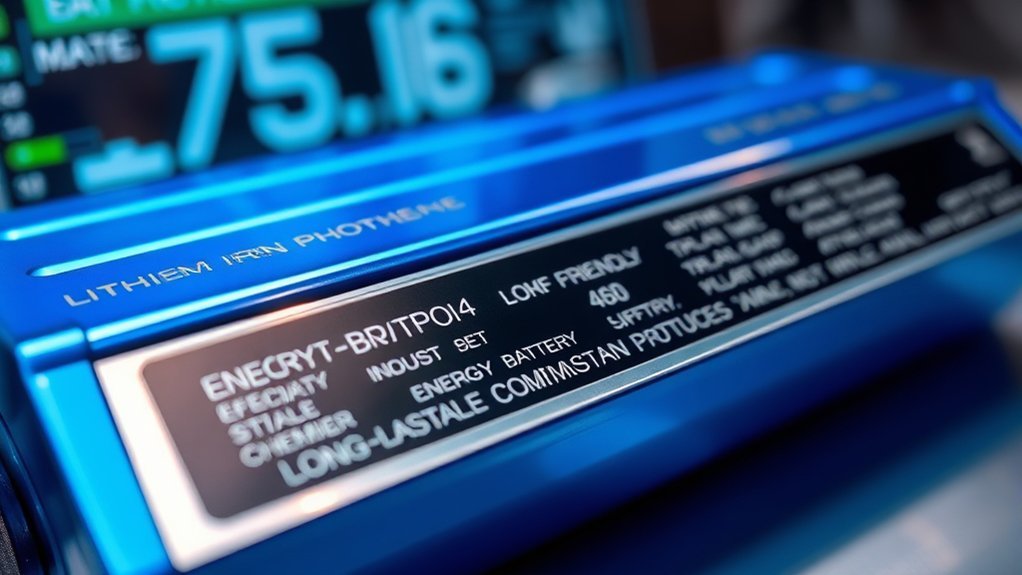
LiFePO4 chemistry offers significant advantages in thermal stability, reducing risks of overheating and thermal runaway. Its longer cycle life enhances durability, making it suitable for demanding applications. Additionally, improved safety features minimize the likelihood of hazardous failures, contributing to overall system reliability.
Enhanced Thermal Stability
Because thermal stability directly impacts safety and reliability, understanding this property is essential when evaluating battery chemistries. LiFePO4 batteries exhibit superior thermal stability due to their stable crystal structure, which resists thermal runaway. Their thermal conductivity facilitates efficient heat dissipation, minimizing temperature spikes during operation. This enhanced heat management reduces the risk of overheating, even under demanding conditions. The battery’s ability to dissipate heat effectively ensures consistent performance and mitigates safety hazards associated with temperature fluctuations. Unlike other chemistries, LiFePO4’s inherent stability contributes to a lower chance of thermal degradation, making it a safer choice for high-demand applications. Overall, the combination of thermal conductivity and heat dissipation capabilities underpins the robust thermal stability that defines LiFePO4 chemistry.
Longer Cycle Life
The inherent chemical stability of LiFePO4 contributes considerably to its extended cycle life, making it a preferred choice for demanding energy storage applications. Its stable crystal structure resists degradation over repeated charge-discharge cycles, resulting in a longer lifespan compared to other chemistries. This durability reduces the frequency of replacements, lowering overall lifecycle costs. Additionally, the longevity supports more sustainable practices, such as battery recycling, by maintaining performance over multiple reuse cycles. The manufacturing costs for LiFePO4 are also affected; fewer replacements and longer service life offset initial expenses.
- Enhanced cycle stability minimizes capacity fade over time
- Reduced need for frequent replacements lowers lifecycle costs
- Stable chemistry simplifies battery recycling processes
- Longer lifespan positively impacts manufacturing cost-efficiency
Improved Safety Features
Although lithium iron phosphate batteries are not entirely immune to safety concerns, their inherent chemical properties considerably enhance their safety profile. The chemical stability of LiFePO4 minimizes the risk of thermal runaway, reducing the likelihood of combustion or fire. This stability allows for effective fire suppression strategies, as the material resists decomposition under high temperatures. Unlike other lithium chemistries, LiFePO4’s robust structure prevents violent reactions, even under abuse conditions such as overcharging or physical damage. This resilience translates into safer operation in various applications, from electric vehicles to grid storage. Overall, the combination of chemical stability and inherent safety features makes LiFePO4 batteries a reliable choice, emphasizing their key advantage in safety-critical environments.
How LiFePO4 Batteries Are Manufactured and Assembled
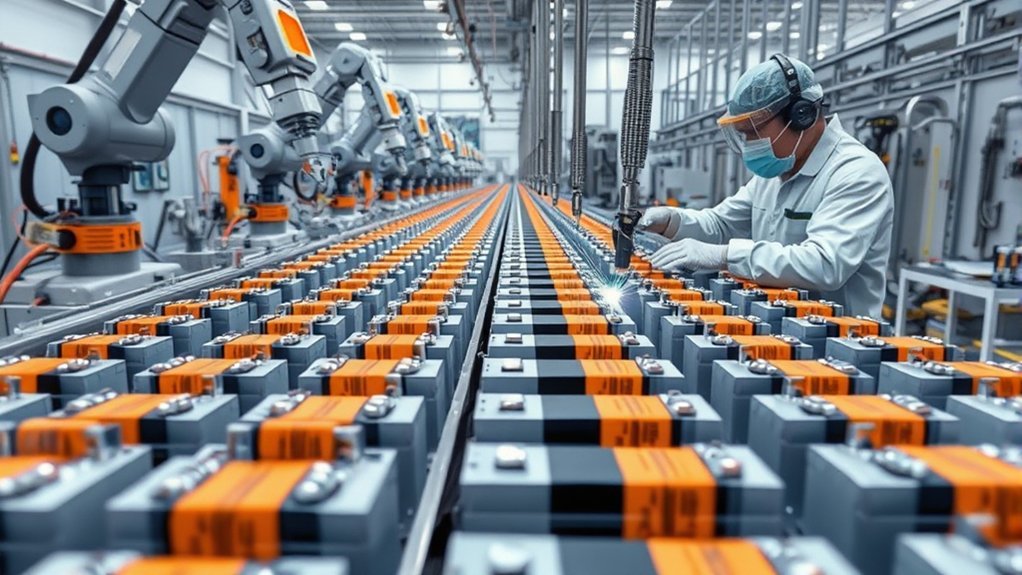
Manufacturing and assembling LiFePO4 batteries involves a series of precise, controlled processes designed to guarantee performance, safety, and longevity. Central to this is the manufacturing process, where electrode materials are carefully coated, dried, and cut to specific dimensions. The battery casing is then assembled, guaranteeing it provides robust mechanical protection and thermal management. During assembly, cells are precisely stacked or wound to optimize space and electrical connectivity. Rigorous quality control measures verify the integrity of each component, including sealing to prevent moisture ingress. Key steps include electrolyte filling, cell balancing, and final encapsulation, all performed in controlled environments. These processes ensure the battery’s durability and safety, making each LiFePO4 cell a reliable energy source.
- Electrode coating and drying
- Cell stacking or winding
- Casing assembly and sealing
- Electrolyte filling and testing
Comparing LiFePO4 to Other Lithium-Ion Battery Types
LiFePO4 batteries stand out among lithium-ion chemistries due to their unique chemical stability and safety profile, which influence their performance characteristics and application suitability. Compared to lithium cobalt oxide or nickel-manganese-cobalt (NMC) batteries, LiFePO4 offers higher thermal stability and reduced risk of thermal runaway, making them safer for large-scale and stationary applications. From an environmental perspective, LiFePO4 batteries are more eco-friendly, as their chemistry facilitates easier and less hazardous battery recycling. This reduces environmental impact by minimizing toxic waste and resource depletion. Additionally, their longer cycle life lessens waste generation over time. Overall, when evaluating alternative lithium-ion chemistries, LiFePO4’s safety, recyclability, and lower environmental footprint position it as a sustainable choice.
Best Applications for LiFePO4 Battery Technology
Due to their high safety profile, long cycle life, and thermal stability, LiFePO4 batteries are ideally suited for a range of demanding applications. Their reliability makes them particularly effective in renewable integration, where consistent energy storage is critical. We also see significant use in electric vehicles, thanks to their durability and fast charging capabilities. These batteries excel in environments requiring high safety standards, minimizing fire risk and thermal runaway. Additionally, their stable chemistry supports stationary energy storage systems, providing grid stability and backup power. The combination of safety, longevity, and efficiency makes LiFePO4 batteries a preferred choice across multiple sectors. As a result, they are increasingly integral to sustainable energy solutions and transportation innovations.
Factors to Consider When Choosing a LiFePO4 Battery
When selecting a LiFePO4 battery, it’s essential to evaluate multiple technical factors to guarantee peak performance and safety. Key considerations include capacity, cycle life, voltage stability, and thermal management, which directly impact efficiency and longevity. Additionally, considering the battery’s environmental impact is vital, as LiFePO4 batteries offer advantages like safer chemistry and easier battery recycling, reducing ecological footprint. Understanding the availability of recycling programs and the lifecycle of the battery helps guarantee responsible disposal and sustainability. Price and warranty terms also influence decision-making, aligning with operational needs and budget constraints. By thoroughly analyzing these factors, we can optimize performance, minimize environmental concerns, and promote sustainable energy solutions.
Common Challenges and Limitations of LiFePO4 Batteries
Despite their many advantages, LiFePO4 batteries face several challenges that can impact their practical application. One key issue is the relatively high manufacturing costs, which can hinder large-scale adoption. Additionally, while LiFePO4’s thermal stability reduces safety concerns, it can also limit energy density compared to other chemistries. Battery recycling remains a concern, as efficient methods are still developing, impacting environmental sustainability. Moreover, the long-term performance can be affected by temperature fluctuations, leading to capacity fade over time. These limitations require ongoing research to optimize manufacturing processes, improve recyclability, and enhance thermal management. Addressing these challenges is essential to fully leverage LiFePO4’s benefits in various applications.
LiFePO4 batteries face costs, recyclability, energy density, and temperature challenges hindering widespread use.
- Manufacturing costs and scalability
- Recycling technology development
- Energy density limitations
- Temperature-dependent performance
How to Properly Maintain and Extend LiFePO4 Battery Life
Maintaining LiFePO4 batteries requires adherence to ideal charging protocols, including avoiding overcharging and ensuring proper voltage levels. Temperature management is critical; operating within recommended ranges minimizes capacity loss and guarantees safety. Regular usage and systematic inspections help identify potential issues early, preserving overall battery health and extending service life.
Optimal Charging Practices
To maximize the lifespan of LiFePO4 batteries, it’s essential to follow ideal charging practices that prevent overcharging, undercharging, and stress on the cells. Proper procedures mitigate capacity loss and extend operational life, reducing the need for frequent replacements and supporting sustainable battery recycling efforts. Maintaining optimal voltage levels safeguards against degradation and minimizes environmental impact.
Key practices include:
- Charging within the recommended voltage range (3.2V–3.3V per cell)
- Avoiding deep discharges below 2.5V per cell
- Using a compatible charger with voltage and current regulation
- Regularly monitoring and balancing cells during charging cycles
Adhering to these practices enhances battery longevity, reduces disposal frequency, and promotes responsible environmental stewardship.
Temperature Management Tips
Effective temperature management is crucial for maximizing the lifespan and performance of LiFePO4 batteries, as temperature fluctuations directly influence chemical stability and internal resistance. Proper thermal regulation, aided by temperature sensors, ensures batteries operate within suitable ranges, preventing degradation. Monitoring ambient and cell temperatures helps identify overheating or cold conditions that may impair capacity or accelerate aging. Implementing active cooling or heating systems maintains consistent thermal conditions. Additionally, regular calibration of temperature sensors enhances accuracy, enabling precise adjustments. Maintaining ideal temperature ranges—typically 0°C to 45°C—extends battery life and sustains efficiency. Below is a snapshot of key temperature management aspects:
| Aspect | Method | Impact |
|---|---|---|
| Thermal regulation | Active cooling/heating | Prevents thermal runaway and degradation |
| Temperature sensors | Regular calibration | Ensures accurate temperature readings |
| Operating range | Maintaining 0–45°C | Extends battery lifespan |
| Overtemperature alert | Automated system triggers | Avoids thermal damage |
| Cold weather prep | Insulation and heaters | Maintains performance in low temps |
Regular Usage and Checks
How can we guarantee our LiFePO4 batteries remain reliable and efficient over time? Regular usage and checks are essential for extending battery lifespan and maintaining peak performance. Consistent monitoring helps identify capacity fade or degradation early, reducing environmental impact through proper battery recycling at end-of-life. To maximize longevity:
- Routinely measure voltage and capacity to detect early signs of deterioration
- Avoid deep discharges; keep state of charge within recommended levels (20-80%)
- Use a compatible battery management system (BMS) for safety and performance oversight
- Schedule periodic inspections to ensure connections are secure and cooling is adequate
Adhering to these practices minimizes unnecessary stress on the battery, promotes sustainable use, and supports responsible environmental impact management through proper recycling processes.
The Future of LiFePO4 Battery Innovation and Market Trends
As advancements in energy storage continue to accelerate, LiFePO4 battery technology is poised to play a pivotal role in shaping sustainable power solutions. Future innovations will likely focus on enhancing energy density, cycle life, and safety, essential for integration with emerging technologies like quantum computing and renewable energy systems. Quantum computing’s demand for rapid, reliable power underscores the importance of high-performance batteries, while increased renewable energy integration requires scalable, durable storage solutions to stabilize grids. Market trends indicate growing adoption across electric vehicles, stationary storage, and portable electronics, driven by decreasing costs and improved manufacturing processes. We anticipate a convergence of material science breakthroughs and smart management systems, propelling LiFePO4 batteries toward greater efficiency, safety, and broader market penetration.
Frequently Asked Questions
What Safety Precautions Are Necessary When Handling Lifepo4 Batteries?
When handling LiFePO4 batteries, we prioritize battery maintenance and storage safety by wearing protective gear, avoiding physical damage, keeping batteries in a cool, dry environment, and preventing short circuits or overcharging to guarantee safe operation.
How Do Temperature Extremes Affect Lifepo4 Battery Performance?
Temperature extremes substantially impact Lifepo4 battery performance, reducing capacity and cycle life. Effective thermal management enhances temperature resilience, ensuring ideal operation and safety. We emphasize maintaining stable temperatures to maximize battery longevity and efficiency in various applications.
Can Lifepo4 Batteries Be Recycled or Reused?
We believe Lifepo4 batteries can be recycled and reused, balancing environmental benefits with technical challenges; battery recycling enhances sustainability, while reuse potential depends on cell condition, emphasizing the importance of proper end-of-life management and advanced recycling techniques.
What Are the Typical Charging Times for Lifepo4 Batteries?
Charging times for LiFePO4 batteries typically range from 3 to 5 hours per cycle, depending on capacity and charger power, which optimizes charging cycle efficiency and enhances battery longevity through controlled, steady-state charging conditions.
Are There Any Environmental Concerns Associated With Lifepo4 Battery Disposal?
We believe Lifepo4 batteries pose minimal environmental concerns if properly disposed of using recommended methods; their environmental impact is considerably lower than traditional batteries, emphasizing the importance of correct disposal to guarantee safety and sustainability.
Conclusion
In sum, LiFePO4 batteries represent a compelling fusion of safety, longevity, and environmental responsibility. Their robust chemistry not only meets demanding energy needs but also aligns with sustainable practices, shaping the future of energy storage. As technology advances, we see a clear trajectory toward wider adoption and innovation. Embracing these batteries means embracing a safer, more sustainable energy landscape—an evolution driven by science, necessity, and a shared commitment to progress.